
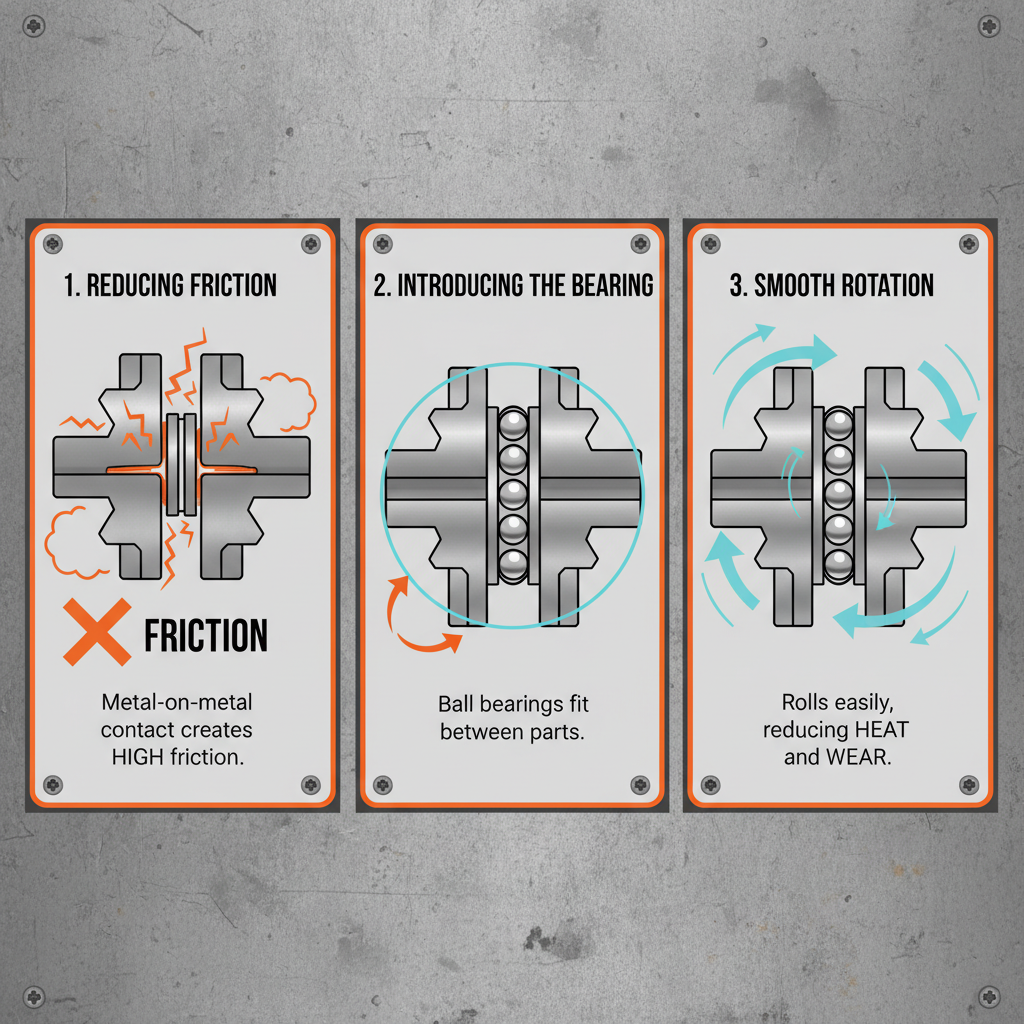
Deep groove ball bearings are foundational components in countless mechanical systems globally, representing a cornerstone of modern industry. Understanding their characteristics, applications, and selection criteria – summarized in a comprehensive deep groove ball bearing chart – is crucial for engineers, maintenance professionals, and procurement specialists alike. They facilitate smooth rotational movement, reduce friction, and contribute significantly to the efficiency and longevity of machinery, impacting sectors from automotive to aerospace.
The increasing demand for high-performance, reliable bearings, driven by advancements in automation and the need for energy efficiency, underscores the importance of informed bearing selection. A well-defined deep groove ball bearing chart serves as an invaluable tool for navigating the complexities of bearing specifications, ensuring optimal performance and minimizing downtime. This ultimately translates to substantial cost savings and improved operational productivity.
Furthermore, advancements in materials science and manufacturing techniques continue to refine deep groove ball bearing designs. A detailed understanding, often presented in a comprehensive deep groove ball bearing chart, enables professionals to leverage these innovations for specific applications, enhancing system performance and reliability.
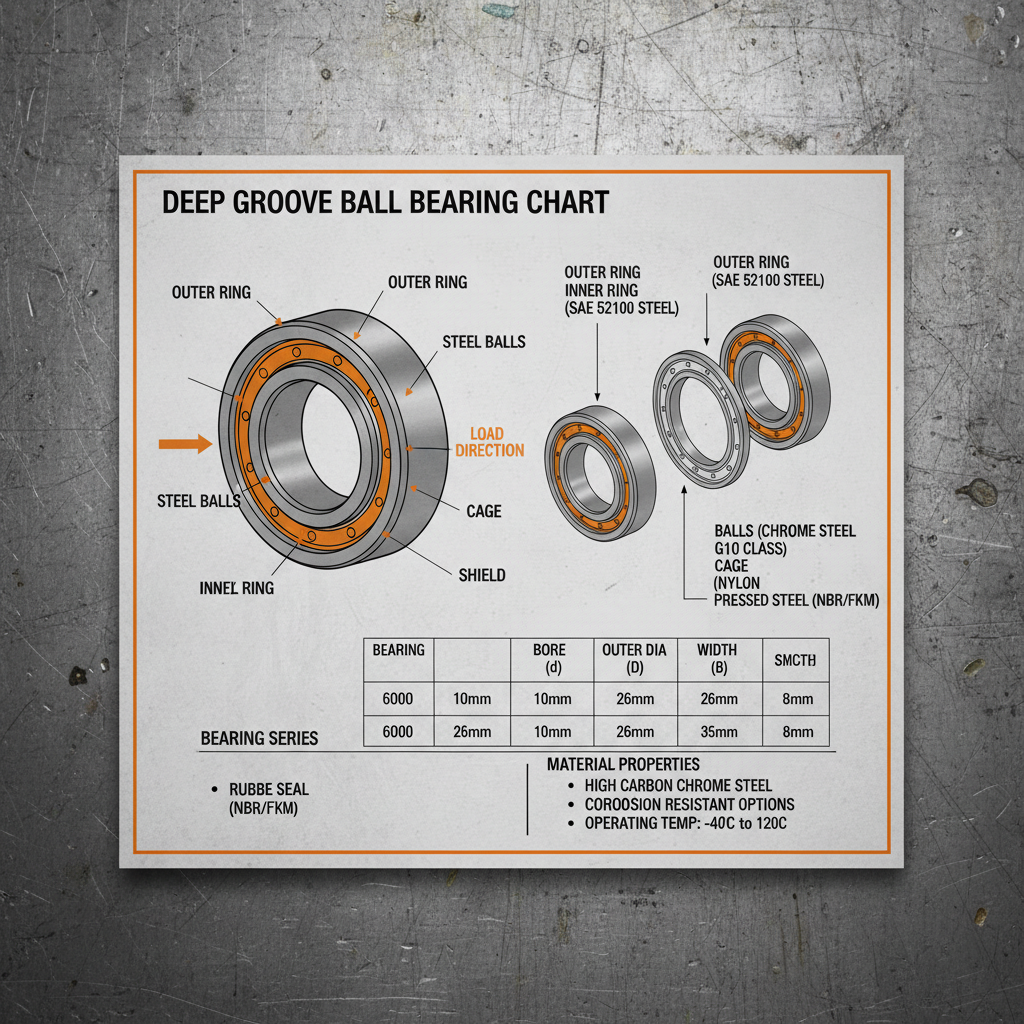
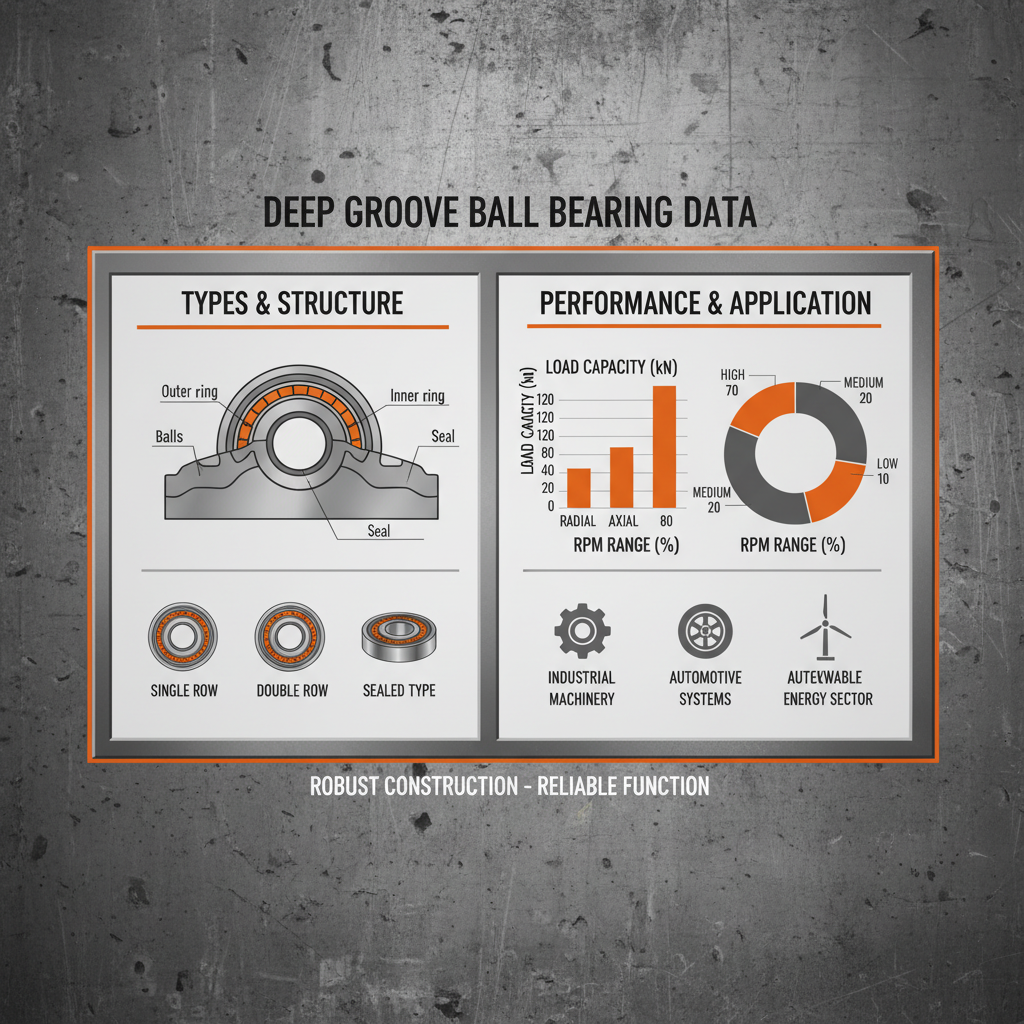
A deep groove ball bearing chart is more than just a catalog of dimensions; it’s a crucial reference tool for selecting the optimal bearing for a specific application. These charts consolidate essential parameters like bore diameter, outside diameter, width, load rating, limiting speed, and precision class, all presented in a standardized format. Understanding how to interpret these parameters is critical for ensuring proper fit, performance, and longevity.
Effectively utilizing a deep groove ball bearing chart minimizes the risk of premature failure, reduces maintenance costs, and improves the overall efficiency of mechanical systems. It allows engineers and technicians to quickly identify suitable bearing options, streamlining the design and procurement processes.
A deep groove ball bearing chart serves as a comprehensive reference guide for selecting the appropriate bearing based on specific application requirements. It consolidates vital parameters like dimensions, load ratings, speed limits, and precision classes, enabling engineers and technicians to efficiently identify the optimal bearing for their needs. It streamlines the procurement process and ensures optimal performance.
The dynamic load rating (C) on a deep groove ball bearing chart represents the maximum load a bearing can withstand for a specified lifespan (typically 1 million revolutions). A higher dynamic load rating indicates greater load-carrying capacity. It's crucial to compare the calculated equivalent dynamic load from your application to the bearing's rating to ensure adequate lifespan and prevent premature failure.
ABEC (Annular Bearing Engineers’ Committee) ratings indicate the tolerance levels of the bearing’s internal components. Higher ABEC ratings (e.g., ABEC 7, ABEC 9) signify tighter tolerances and greater precision, resulting in smoother operation and reduced vibration. However, higher ABEC ratings don’t always equate to a longer lifespan; they are primarily relevant for high-speed applications where accuracy is paramount.
Limiting speed, as shown on a deep groove ball bearing chart, is the maximum rotational speed a bearing can sustain without experiencing excessive heat or premature failure. Exceeding the limiting speed can cause the bearing to overheat, leading to reduced lifespan and potential damage. Select a bearing with a limiting speed that comfortably exceeds the application's operating speed.
Internal clearance, also found on a deep groove ball bearing chart, refers to the free play between the bearing's internal components. Proper internal clearance is critical for optimal performance. Too little clearance can cause overheating and seizure, while too much can lead to noise and vibration. Clearance requirements vary depending on the application and operating conditions.
Common materials include chrome steel (SAE 52100), stainless steel (AISI 440C), and ceramic (silicon nitride). Chrome steel offers excellent hardness and wear resistance. Stainless steel provides corrosion resistance. Ceramic bearings are lightweight and exhibit exceptional high-speed capabilities. The deep groove ball bearing chart will often specify the material used and its corresponding properties.
In conclusion, the deep groove ball bearing chart is an indispensable tool for anyone involved in the selection, application, and maintenance of these critical components. Understanding its key parameters, industry standards, and emerging trends empowers professionals to optimize performance, reduce costs, and enhance the reliability of mechanical systems across a vast range of industries.
Looking ahead, the continued evolution of materials science, manufacturing techniques, and digitalization will further refine deep groove ball bearing technology. Proactive adoption of these advancements, guided by comprehensive deep groove ball bearing chart information, will be essential for maintaining a competitive edge and driving innovation in the years to come.



 Afrikaans
 Albanian
 Amharic
 Arabic
 Armenian
 Azerbaijani
 Basque
 Belarusian
 Bengali
 Bosnian
 Bulgarian
 Catalan
 Cebuano
 Corsican
 Croatian
 Czech
Czech
 Danish
 Dutch
Dutch
 Esperanto
 Estonian
 Finnish
 French
 Frisian
 Galician
 Georgian
 German
 Greek
Greek
 Gujarati
 Haitian Creole
 Hausa
Hausa
 Hawaiian
 Hebrew
 Hindi
Hindi
 Miao
Miao
 Hungarian
 Icelandic
 Igbo
Igbo
 Indonesian
 Irish
Irish
 Italian
 Japanese
 Javanese
 Kannada
 Kazakh
 Khmer
Khmer
 Rwandese
 Korean
 Kurdish
 Kyrgyz
 Lao
Lao
 Latin
Latin
 Latvian
 Lithuanian
 Luxembourgish
 Macedonian
 Malgashi
 Malay
Malay
 Malayalam
 Maltese
 Maori
Maori
 Marathi
 Mongolian
 Myanmar
 Nepali
 Norwegian
 Norwegian
 Occitan
 Pashto
 Persian
 Polish
 Portuguese
 Punjabi
 Romanian
 Russian
 Samoan
 Scottish Gaelic
 Serbian
 Sesotho
 Shona
Shona
 Sindhi
 Sinhala
 Slovak
 Slovenian
 Somali
 Spanish
 Sundanese
 Swahili
 Swedish
 Tagalog
 Tajik
Tajik
 Tamil
Tamil
 Tatar
Tatar
 Telugu
 Thai
Thai
 Turkish
 Turkmen
 Ukrainian
 Urdu
Urdu
 Uighur
 Uzbek
Uzbek
 Vietnamese
 Welsh
Welsh
 Bantu
Bantu
 Yiddish
 Yoruba
 Zulu
Zulu
 English