
Understanding the precise deep groove ball bearing specification is fundamental for any engineer or procurement specialist aiming to maximize machine uptime and operational efficiency. These bearings are the most versatile in the industrial world, designed to handle both radial and axial loads, making them indispensable across a vast array of mechanical systems. By mastering the technical parameters, companies can ensure a perfect fit, reducing friction and preventing premature mechanical failure.
On a global scale, the demand for standardized bearing specifications has surged as automation and precision robotics become the norm in manufacturing. Whether it is a small electric motor in a household appliance or a massive conveyor system in a mining facility, the adherence to a strict deep groove ball bearing specification ensures interchangeability and reliability across international borders. This standardization is what allows a machine designed in Germany to be serviced with components sourced from a high-quality manufacturer in Asia without compromising safety.
However, the challenge often lies in the nuance—selecting the wrong clearance or seal type can lead to catastrophic failure in high-speed applications. This guide aims to demystify the complexities of bearing dimensions, load ratings, and material grades. By bridging the gap between dry technical data and practical application, we empower industry professionals to make informed decisions that enhance the longevity and sustainability of their industrial assets.
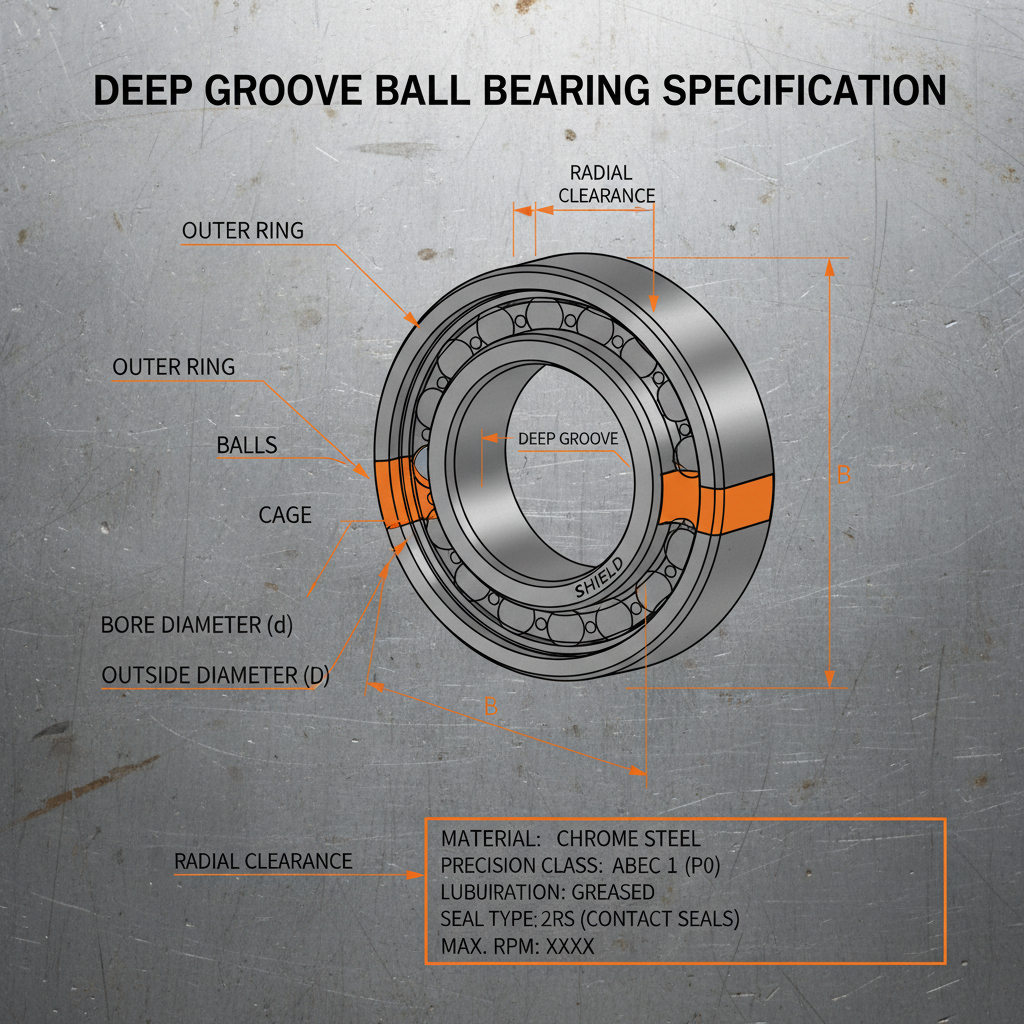
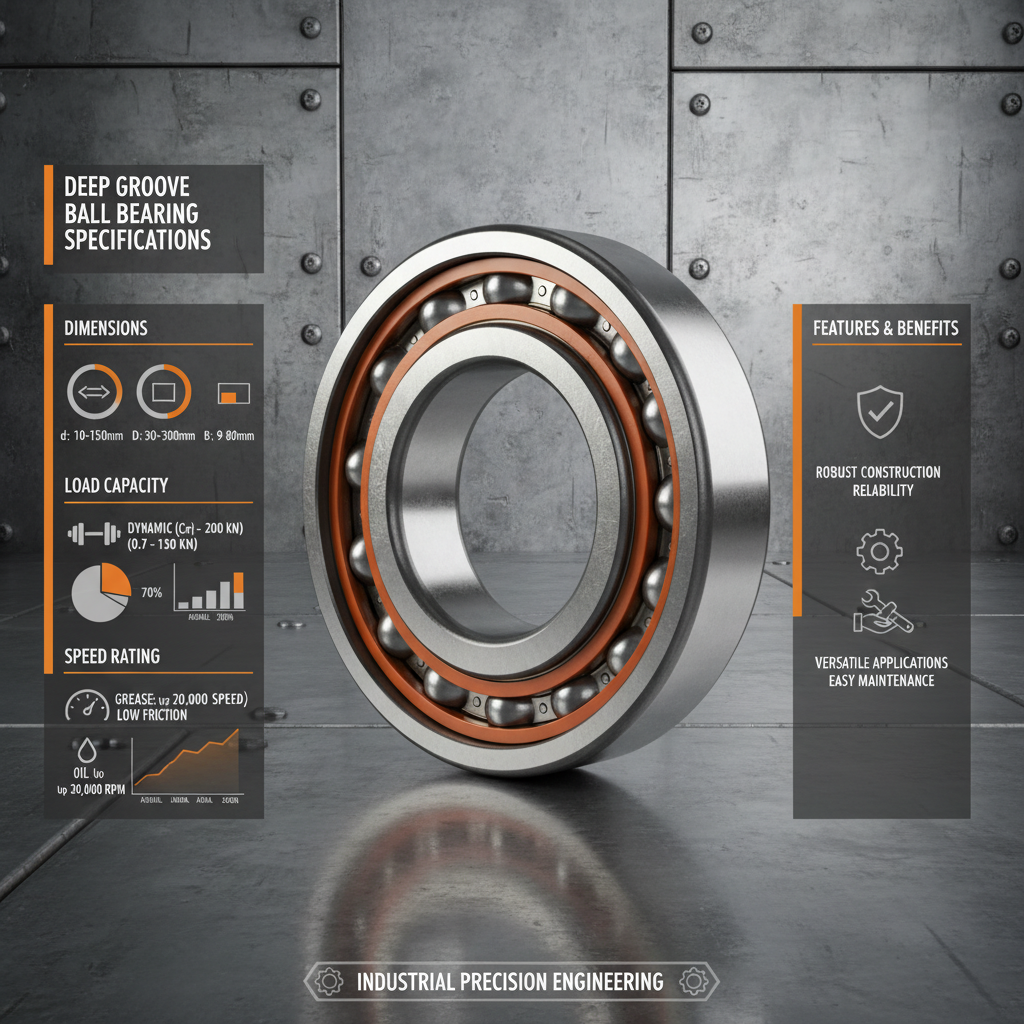
The global industrial landscape relies heavily on the standardization of mechanical components. According to ISO standards, the precision of a deep groove ball bearing specification directly correlates with the energy efficiency of the machine. When specifications are ignored or approximated, the resulting misalignment leads to increased heat generation and energy waste, which on a global scale, contributes to higher carbon emissions in the manufacturing sector.
Furthermore, in emerging markets and remote industrial zones, having a clear and universal specification allows for faster maintenance cycles. Instead of custom-fabricating parts, technicians can rely on standardized catalogs to find replacements that fit perfectly, thereby reducing the downtime of critical infrastructure like water pumps, power generators, and agricultural machinery.
For high-temperature applications, you should prioritize two things in the specification: internal clearance and material. Select a bearing with C3 or C4 clearance to allow for thermal expansion of the inner ring. Additionally, ensure the specification includes a high-temperature grease or a ceramic material that can maintain structural integrity without melting or seizing at elevated temperatures.
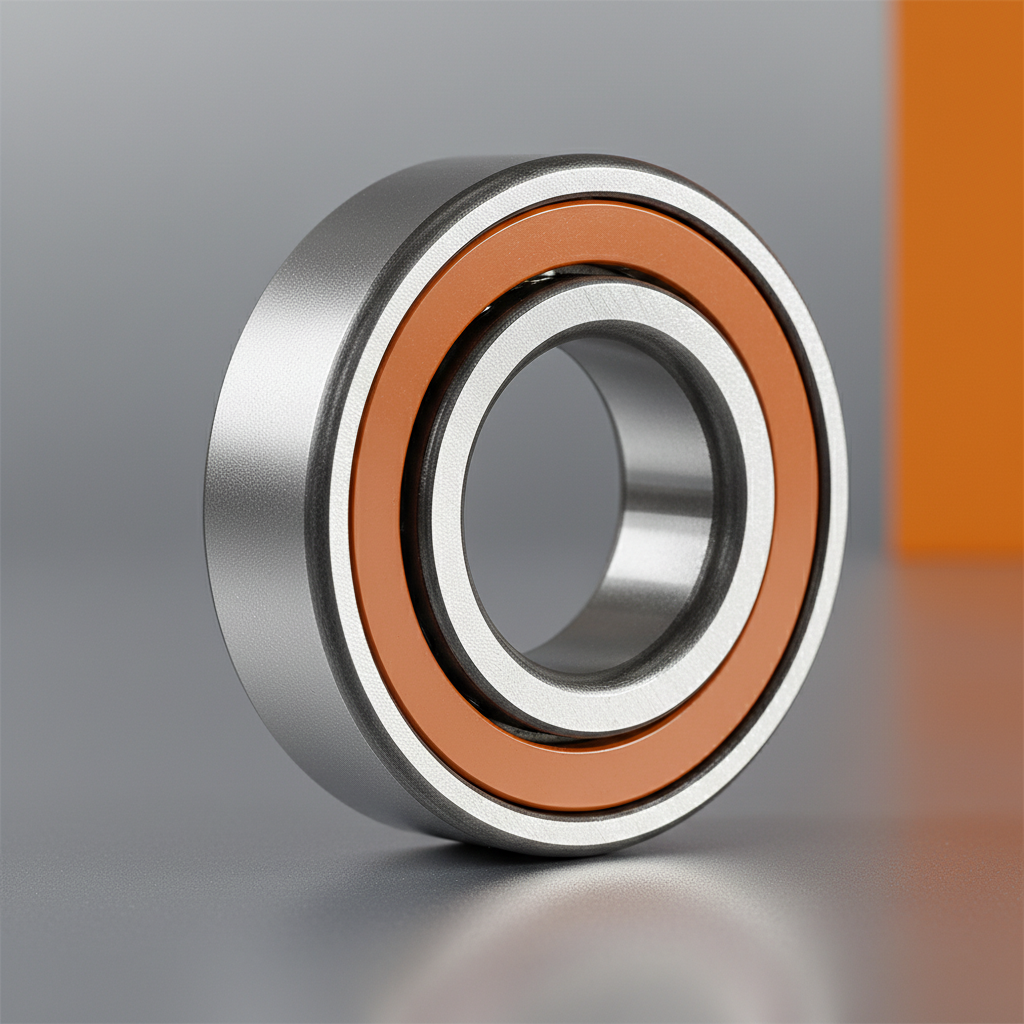
ZZ refers to metal shields on both sides, which are excellent for preventing large particles from entering and reducing friction, but they do not provide a complete seal against liquids. 2RS indicates rubber seals on both sides, which provide a nearly airtight seal, making them ideal for environments with moisture, dust, or fine powders, although they create slightly more drag.
Yes, deep groove ball bearings are designed to handle both radial and axial loads. However, their axial load capacity is significantly lower than that of a Taper Roller Bearing or a Thrust Ball Bearing. If your application requires heavy axial force, you should check the specification's axial load limit to ensure it won't lead to premature wear of the raceway shoulders.
Precision grades define the tolerance of the bearing's dimensions and the smoothness of the raceways. P0 is standard industrial grade. P6 and P5 are high-precision grades used in CNC machinery and high-speed motors. Using a P5 specification reduces vibration (run-out), which increases the accuracy of the machine and extends the life of the entire assembly.
You should verify the specification during every major overhaul or when replacing a failed part. Over time, machinery may be modified or operated under different loads than originally intended. Re-evaluating the specification allows you to potentially upgrade to a more durable material or a better seal type to prevent the same failure from recurring.
It depends on the application. For most general industrial uses, chrome steel is the most cost-effective. However, for high-speed applications, environments with electrical currents (to prevent arcing), or extreme heat, ceramic hybrids are worth the investment because they offer lower friction, higher speed limits, and significantly longer lifespans, reducing long-term maintenance costs.
Mastering the deep groove ball bearing specification is more than just a technical requirement; it is a strategic advantage in the world of mechanical engineering. From selecting the correct internal clearance to choosing the appropriate seal and precision grade, every detail in the specification contributes to the efficiency, safety, and longevity of industrial machinery. By aligning technical parameters with real-world operating conditions, businesses can drastically reduce operational costs and improve their overall production reliability.
As we move toward an era of Industry 4.0, the integration of smart sensors and advanced materials will continue to refine these specifications. We encourage engineers and procurement officers to move beyond "standard" replacements and instead analyze their specific load and environmental needs to optimize their machinery. For high-quality components and expert guidance on bearing specifications, visit our website: www.arybearing.com.


 Afrikaans
 Albanian
 Amharic
 Arabic
 Armenian
 Azerbaijani
 Basque
 Belarusian
 Bengali
 Bosnian
 Bulgarian
 Catalan
 Cebuano
 Corsican
 Croatian
 Czech
Czech
 Danish
 Dutch
Dutch
 Esperanto
 Estonian
 Finnish
 French
 Frisian
 Galician
 Georgian
 German
 Greek
Greek
 Gujarati
 Haitian Creole
 Hausa
Hausa
 Hawaiian
 Hebrew
 Hindi
Hindi
 Miao
Miao
 Hungarian
 Icelandic
 Igbo
Igbo
 Indonesian
 Irish
Irish
 Italian
 Japanese
 Javanese
 Kannada
 Kazakh
 Khmer
Khmer
 Rwandese
 Korean
 Kurdish
 Kyrgyz
 Lao
Lao
 Latin
Latin
 Latvian
 Lithuanian
 Luxembourgish
 Macedonian
 Malgashi
 Malay
Malay
 Malayalam
 Maltese
 Maori
Maori
 Marathi
 Mongolian
 Myanmar
 Nepali
 Norwegian
 Norwegian
 Occitan
 Pashto
 Persian
 Polish
 Portuguese
 Punjabi
 Romanian
 Russian
 Samoan
 Scottish Gaelic
 Serbian
 Sesotho
 Shona
Shona
 Sindhi
 Sinhala
 Slovak
 Slovenian
 Somali
 Spanish
 Sundanese
 Swahili
 Swedish
 Tagalog
 Tajik
Tajik
 Tamil
Tamil
 Tatar
Tatar
 Telugu
 Thai
Thai
 Turkish
 Turkmen
 Ukrainian
 Urdu
Urdu
 Uighur
 Uzbek
Uzbek
 Vietnamese
 Welsh
Welsh
 Bantu
Bantu
 Yiddish
 Yoruba
 Zulu
Zulu
 English