
Magnetic bearings theory design and application to rotating machinery represents a significant advancement in the field of rotating equipment, offering substantial benefits over traditional bearing systems. These systems leverage the principles of electromagnetism to support rotating components without physical contact, dramatically reducing friction, wear, and energy consumption. The understanding and implementation of magnetic bearing technology are crucial for industries demanding high precision, reliability, and efficiency in their rotating machinery.
The global demand for efficient and reliable rotating machinery is continuously increasing, driven by growth in sectors like aerospace, power generation, petrochemicals, and high-speed transportation. This demand necessitates innovative solutions to overcome the limitations of conventional bearings, such as lubrication requirements, limited speed capabilities, and susceptibility to failure. Magnetic bearings theory design and application to rotating machinery directly addresses these challenges, providing a compelling alternative with superior performance characteristics.
The continued advancement and adoption of magnetic bearing technology are vital for achieving greater energy efficiency, extending equipment lifespan, and minimizing maintenance costs, contributing to sustainable industrial practices worldwide. It is a cornerstone for future innovation in rotating machinery across numerous critical sectors.
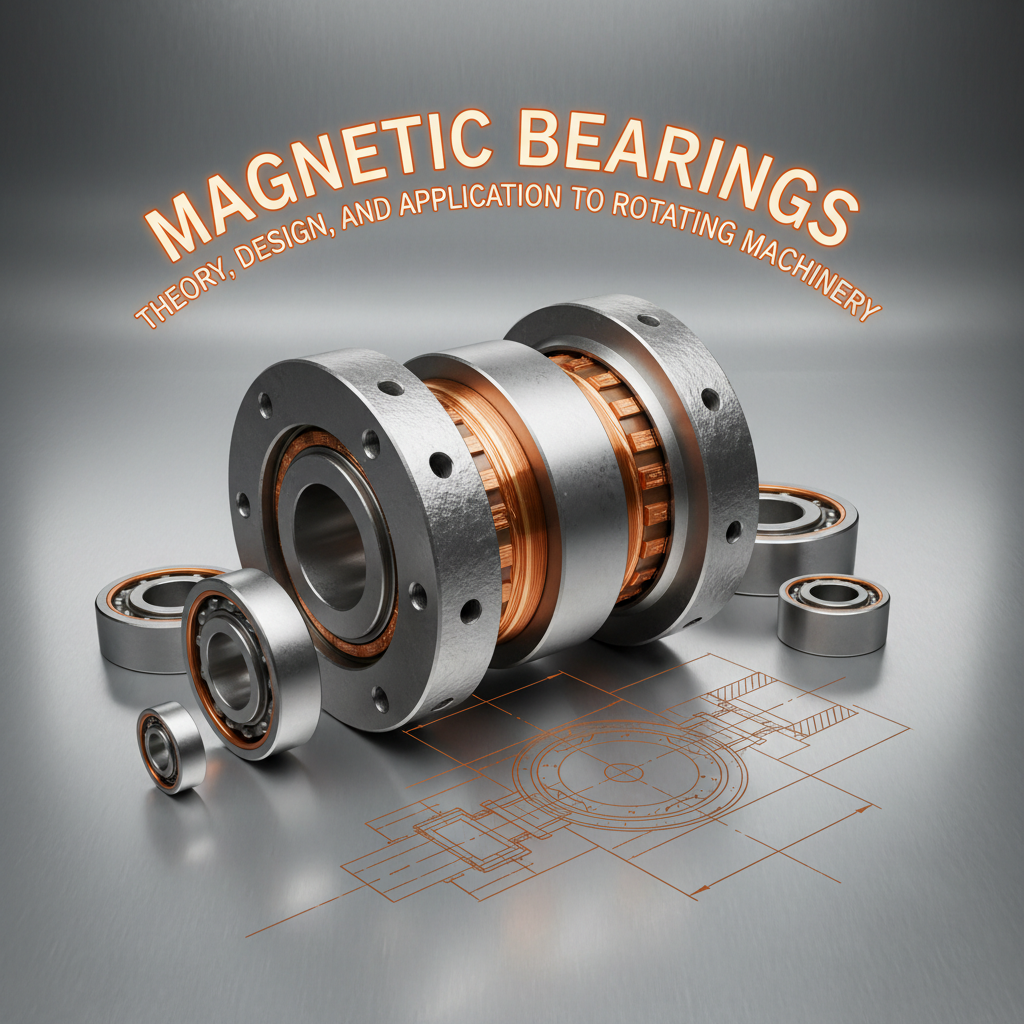
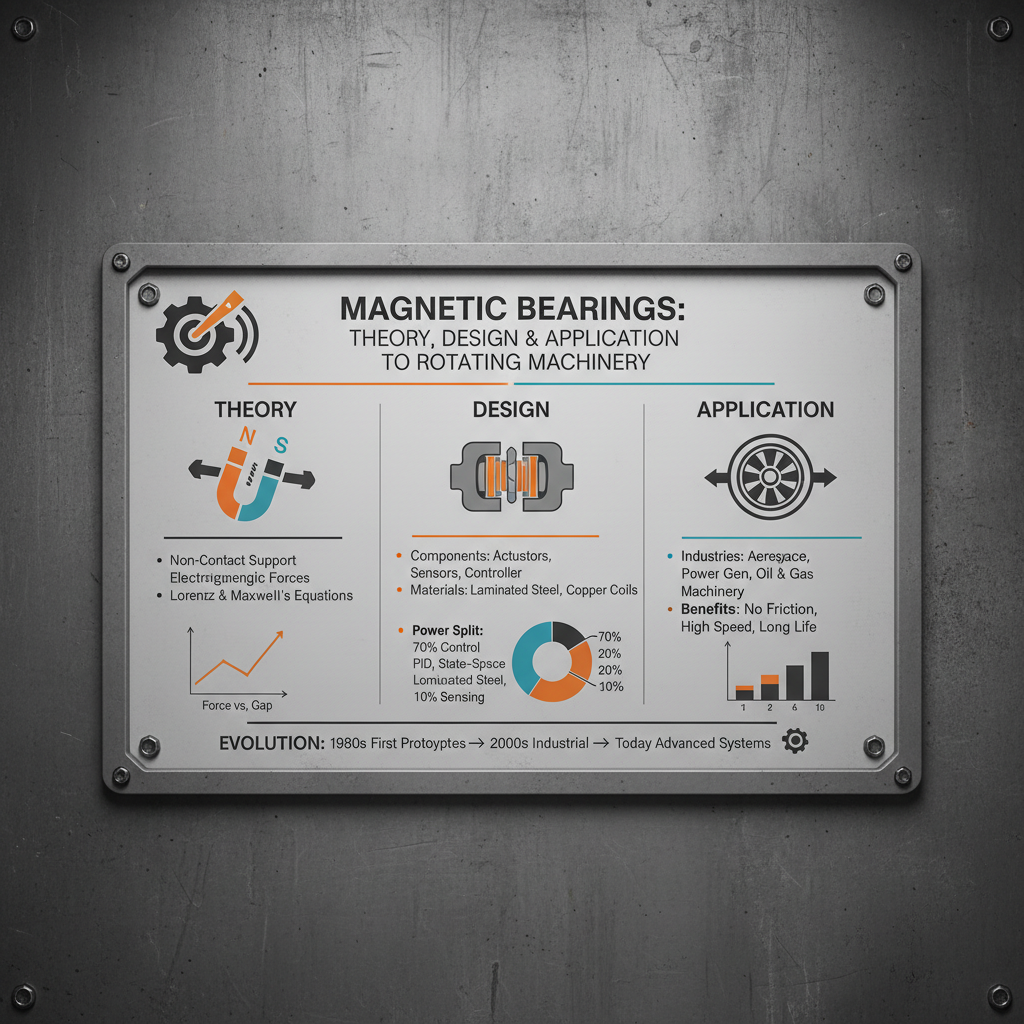
The fundamental principle behind magnetic bearings theory design and application to rotating machinery lies in the use of magnetic fields to levitate and support a rotating shaft. Unlike conventional bearings that rely on physical contact and lubrication, magnetic bearings utilize electromagnetic forces to create a non-contacting support system. This dramatically reduces friction and wear, leading to increased efficiency and reliability. magnetic bearings theory design and application to rotating machinery offers a comprehensive exploration of these principles.
This technology’s design involves precisely controlling magnetic fields generated by electromagnets or permanent magnets. Sophisticated control systems, often employing feedback loops and advanced algorithms, are essential for maintaining stability and accommodating dynamic loads. The intricacies of magnetic bearing design require a deep understanding of electromagnetism, control theory, and mechanical engineering.
While the initial investment for magnetic bearings is typically higher than for traditional bearings, the long-term costs are often lower. This is due to reduced maintenance needs (no lubrication), increased lifespan, and improved energy efficiency. A detailed life-cycle cost analysis is crucial for accurately comparing the total cost of ownership for each technology, factoring in downtime, repair costs, and energy consumption over the equipment’s operational life.
Magnetic bearings can perform effectively in high-temperature environments, but careful design considerations are necessary. The performance of magnets can be affected by temperature, requiring the selection of materials with high Curie temperatures or the use of active cooling systems. The control system and associated electronics also need to be appropriately protected from heat.
Installation and maintenance of magnetic bearings require specialized knowledge and training. Due to the sophisticated control systems and precise alignment requirements, it's generally recommended to engage experienced technicians or engineers. Regular monitoring and calibration are crucial to ensure optimal performance and prevent potential issues.
While magnetic bearings offer numerous advantages, they are not universally suitable for all applications. They are most advantageous in high-speed, high-precision applications where reduced friction and wear are critical. Factors such as load capacity, operating environment, and cost need to be carefully evaluated to determine if magnetic bearings are the appropriate choice.
Safety is paramount when working with magnetic bearings. Strong magnetic fields can interfere with electronic devices and potentially pose a hazard to individuals with implanted medical devices. Proper shielding and grounding are essential. Additionally, the control system should incorporate fail-safe mechanisms to prevent rotor drop in the event of a power failure.
Magnetic bearings offer superior vibration control compared to traditional bearings. Active magnetic bearings, in particular, can actively damp vibrations through precise control of the magnetic forces. This is especially beneficial in applications sensitive to vibration, such as high-speed machinery and precision instruments. Their ability to actively adjust damping is a significant advantage.
In conclusion, magnetic bearings theory design and application to rotating machinery represents a paradigm shift in the field of rotating machinery. By eliminating friction and wear, these innovative systems offer significant advantages in terms of energy efficiency, reliability, and sustainability. The continued advancements in materials, control systems, and integration with digital technologies promise even greater benefits in the future.
Looking ahead, wider adoption of magnetic bearings will be crucial for achieving sustainable industrial practices and addressing global challenges related to energy consumption and environmental impact. We encourage further exploration of this exciting technology and invite you to visit our website at www.arybearing.com to learn more about our innovative magnetic bearing solutions.

 Afrikaans
 Albanian
 Amharic
 Arabic
 Armenian
 Azerbaijani
 Basque
 Belarusian
 Bengali
 Bosnian
 Bulgarian
 Catalan
 Cebuano
 Corsican
 Croatian
 Czech
Czech
 Danish
 Dutch
Dutch
 Esperanto
 Estonian
 Finnish
 French
 Frisian
 Galician
 Georgian
 German
 Greek
Greek
 Gujarati
 Haitian Creole
 Hausa
Hausa
 Hawaiian
 Hebrew
 Hindi
Hindi
 Miao
Miao
 Hungarian
 Icelandic
 Igbo
Igbo
 Indonesian
 Irish
Irish
 Italian
 Japanese
 Javanese
 Kannada
 Kazakh
 Khmer
Khmer
 Rwandese
 Korean
 Kurdish
 Kyrgyz
 Lao
Lao
 Latin
Latin
 Latvian
 Lithuanian
 Luxembourgish
 Macedonian
 Malgashi
 Malay
Malay
 Malayalam
 Maltese
 Maori
Maori
 Marathi
 Mongolian
 Myanmar
 Nepali
 Norwegian
 Norwegian
 Occitan
 Pashto
 Persian
 Polish
 Portuguese
 Punjabi
 Romanian
 Russian
 Samoan
 Scottish Gaelic
 Serbian
 Sesotho
 Shona
Shona
 Sindhi
 Sinhala
 Slovak
 Slovenian
 Somali
 Spanish
 Sundanese
 Swahili
 Swedish
 Tagalog
 Tajik
Tajik
 Tamil
Tamil
 Tatar
Tatar
 Telugu
 Thai
Thai
 Turkish
 Turkmen
 Ukrainian
 Urdu
Urdu
 Uighur
 Uzbek
Uzbek
 Vietnamese
 Welsh
Welsh
 Bantu
Bantu
 Yiddish
 Yoruba
 Zulu
Zulu
 English