Understanding the nuances of deep groove ball bearing price is essential for procurement managers and engineers who seek to balance mechanical performance with operational budgets. These versatile components are the backbone of modern machinery, providing low friction and high reliability across countless industrial applications globally.
The fluctuation in the market value of these bearings is often driven by raw material costs, precision requirements, and manufacturing scales. For businesses operating in the competitive landscape of general equipment manufacturing, securing a competitive deep groove ball bearing price can mean the difference between a profitable project and a budget overrun.
Ultimately, looking beyond the initial sticker price to the Total Cost of Ownership (TCO) allows companies to optimize their maintenance cycles. By analyzing how the deep groove ball bearing price correlates with lifespan and energy efficiency, stakeholders can make informed decisions that enhance long-term productivity and sustainability.
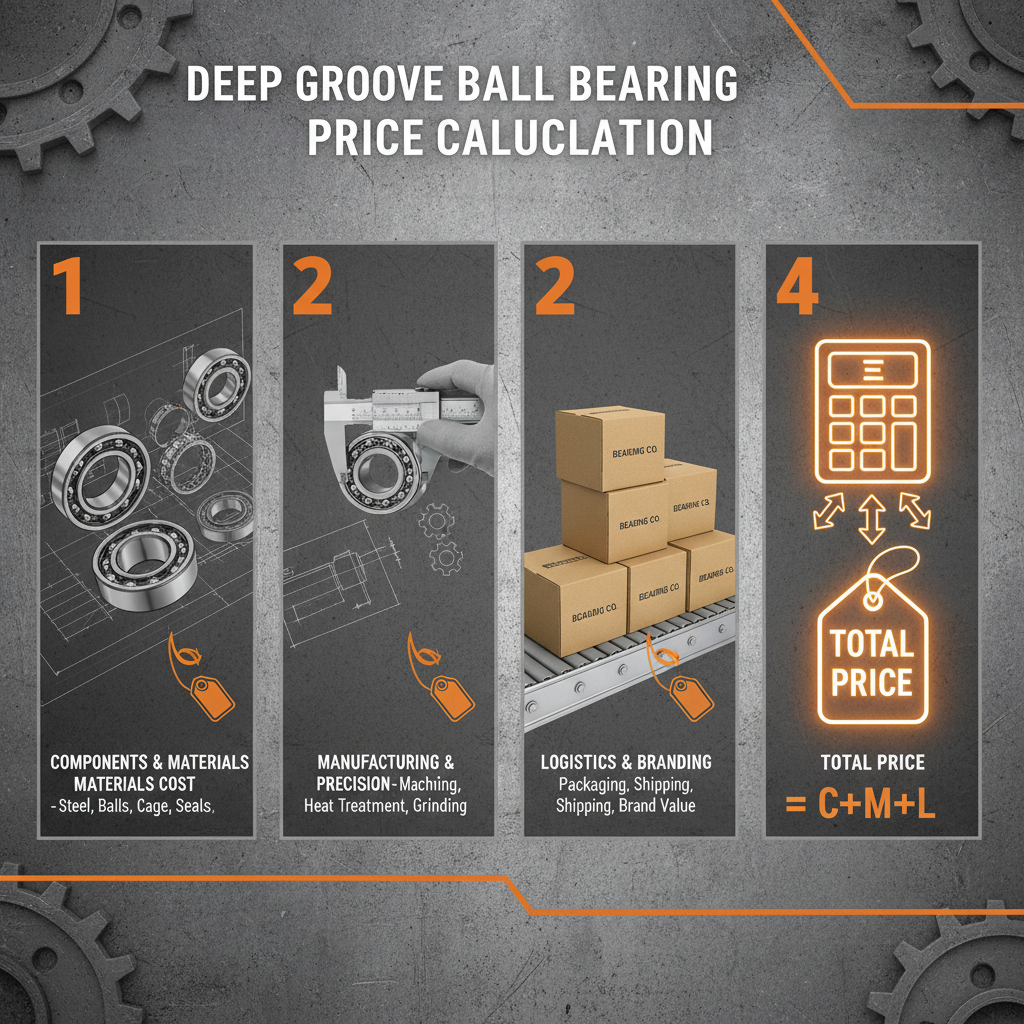
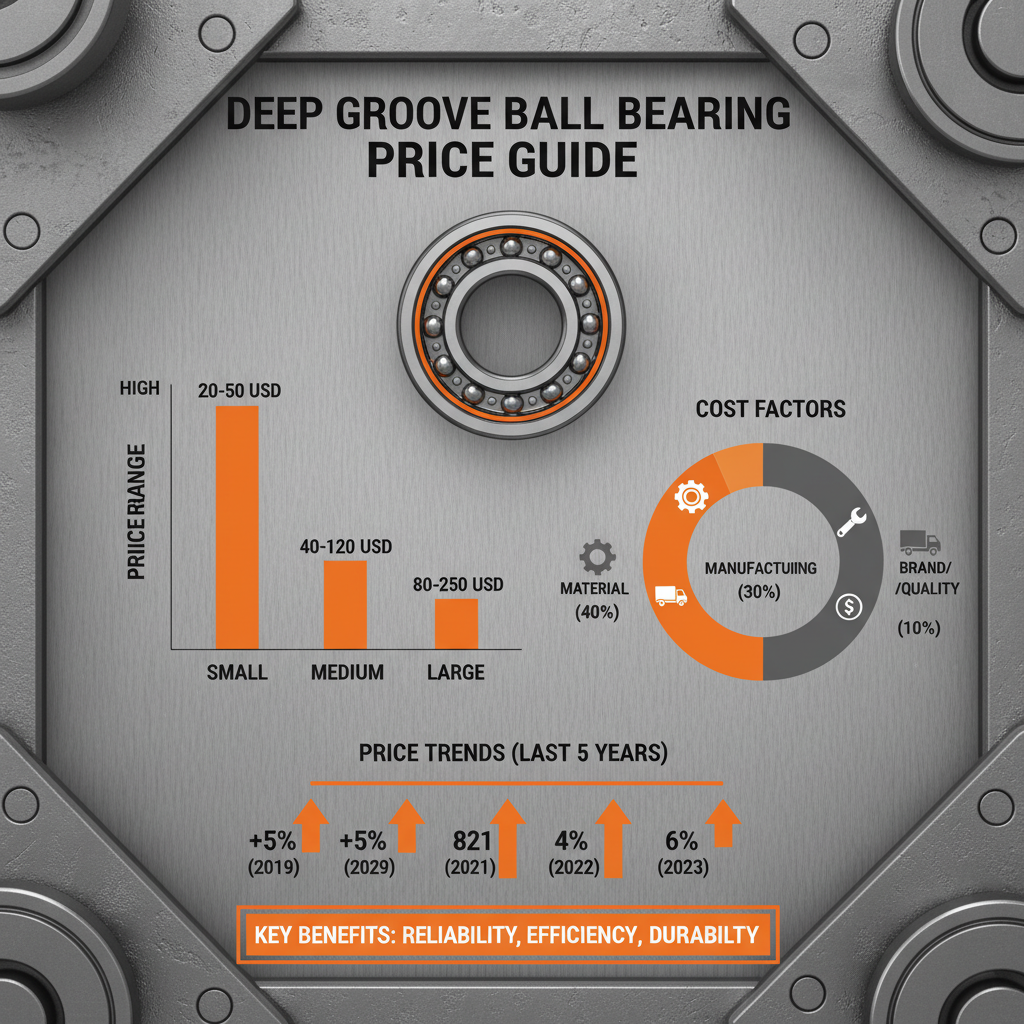
On a global scale, the deep groove ball bearing price is heavily influenced by the volatility of high-carbon chromium steel markets. As ISO standards for precision increase, the cost of manufacturing processes—such as heat treatment and precision grinding—rises, directly impacting the end-user price.
Furthermore, geopolitical shifts and supply chain disruptions in major manufacturing hubs like China and Germany create pricing waves. When logistics costs spike or trade tariffs are implemented, the landed deep groove ball bearing price often fluctuates, forcing industries to adopt more strategic inventory management to avoid downtime.
Price variance is primarily due to the precision of the manufacturing process and the quality of the steel used. Premium brands invest more in heat treatment and precision grinding to achieve tighter tolerances (e.g., ABEC-7), which reduces vibration and increases lifespan, justifying a higher price point compared to generic alternatives.
The best way to reduce costs is to focus on the Total Cost of Ownership (TCO). By investing in higher-quality bearings with better seals and lubrication, you extend the interval between replacements and reduce unplanned downtime, which is far more expensive than the initial purchase price.
Yes, most manufacturers offer tiered pricing. Bulk ordering reduces the per-unit cost by optimizing shipping and production runs. However, it is important to ensure you have proper climate-controlled storage to prevent corrosion of the bearings while they are in inventory.
If your application involves moisture, chemicals, or food-grade environments, the price premium for stainless steel is essential. Chrome steel will rust quickly in these conditions, leading to immediate failure, whereas stainless steel maintains its integrity, making it the more cost-effective choice for corrosive environments.
ABEC ratings indicate the tolerance of the bearing. As the rating increases (from 1 to 7), the allowable deviation in diameter and sphericity decreases. This requires more expensive machinery and more rigorous quality checks, leading to a higher price but allowing for much higher rotational speeds and lower noise.
The most competitive pricing is usually found by sourcing directly from reputable manufacturers who specialize in the bearing and parts industry. Visiting specialized suppliers like www.arybearing.com allows you to access a wide range of categories and precision levels at factory-direct rates.
Navigating the complexities of the deep groove ball bearing price requires a holistic understanding of material science, precision engineering, and market dynamics. We have seen that while the initial cost is a critical factor, the true value is found in the balance between performance, durability, and the reduction of operational downtime. By prioritizing quality and precision, businesses can ensure that their machinery operates at peak efficiency with minimal maintenance overhead.
Looking forward, the integration of smart monitoring and sustainable materials will redefine how we perceive bearing costs, shifting the focus from "price per unit" to "value per hour of operation." We suggest that procurement teams move toward strategic partnerships with quality manufacturers to stabilize their supply chains and optimize their long-term budgets. For high-quality solutions and competitive pricing, we invite you to visit our website: www.arybearing.com.

 Afrikaans
 Albanian
 Amharic
 Arabic
 Armenian
 Azerbaijani
 Basque
 Belarusian
 Bengali
 Bosnian
 Bulgarian
 Catalan
 Cebuano
 Corsican
 Croatian
 Czech
Czech
 Danish
 Dutch
Dutch
 Esperanto
 Estonian
 Finnish
 French
 Frisian
 Galician
 Georgian
 German
 Greek
Greek
 Gujarati
 Haitian Creole
 Hausa
Hausa
 Hawaiian
 Hebrew
 Hindi
Hindi
 Miao
Miao
 Hungarian
 Icelandic
 Igbo
Igbo
 Indonesian
 Irish
Irish
 Italian
 Japanese
 Javanese
 Kannada
 Kazakh
 Khmer
Khmer
 Rwandese
 Korean
 Kurdish
 Kyrgyz
 Lao
Lao
 Latin
Latin
 Latvian
 Lithuanian
 Luxembourgish
 Macedonian
 Malgashi
 Malay
Malay
 Malayalam
 Maltese
 Maori
Maori
 Marathi
 Mongolian
 Myanmar
 Nepali
 Norwegian
 Norwegian
 Occitan
 Pashto
 Persian
 Polish
 Portuguese
 Punjabi
 Romanian
 Russian
 Samoan
 Scottish Gaelic
 Serbian
 Sesotho
 Shona
Shona
 Sindhi
 Sinhala
 Slovak
 Slovenian
 Somali
 Spanish
 Sundanese
 Swahili
 Swedish
 Tagalog
 Tajik
Tajik
 Tamil
Tamil
 Tatar
Tatar
 Telugu
 Thai
Thai
 Turkish
 Turkmen
 Ukrainian
 Urdu
Urdu
 Uighur
 Uzbek
Uzbek
 Vietnamese
 Welsh
Welsh
 Bantu
Bantu
 Yiddish
 Yoruba
 Zulu
Zulu
 English