
Farm equipment bearings are critical components ensuring the smooth and reliable operation of agricultural machinery. From combine harvesters and tractors to planters and sprayers, these bearings withstand immense stress, varying temperatures, and exposure to harsh environmental elements. The global demand for food production drives a consistent need for durable and high-performing farm equipment, making bearings an essential part of the agricultural supply chain. Understanding their function, types, and maintenance is vital for maximizing efficiency and minimizing downtime during crucial planting and harvesting seasons.
The agricultural sector is undergoing rapid modernization, with increasing automation and the adoption of precision farming techniques. This evolution places even greater demands on the performance and reliability of farm equipment. Consequently, advancements in bearing technology – including materials, lubrication, and sealing – are paramount. The economic impact of bearing failure can be significant, leading to costly repairs, delayed harvests, and reduced crop yields.
Investing in quality farm equipment bearings isn’t just about replacing a worn-out part; it’s about safeguarding productivity, extending the lifespan of valuable machinery, and contributing to global food security. Proper selection and proactive maintenance of these components can yield substantial long-term benefits for farmers and agricultural businesses alike.
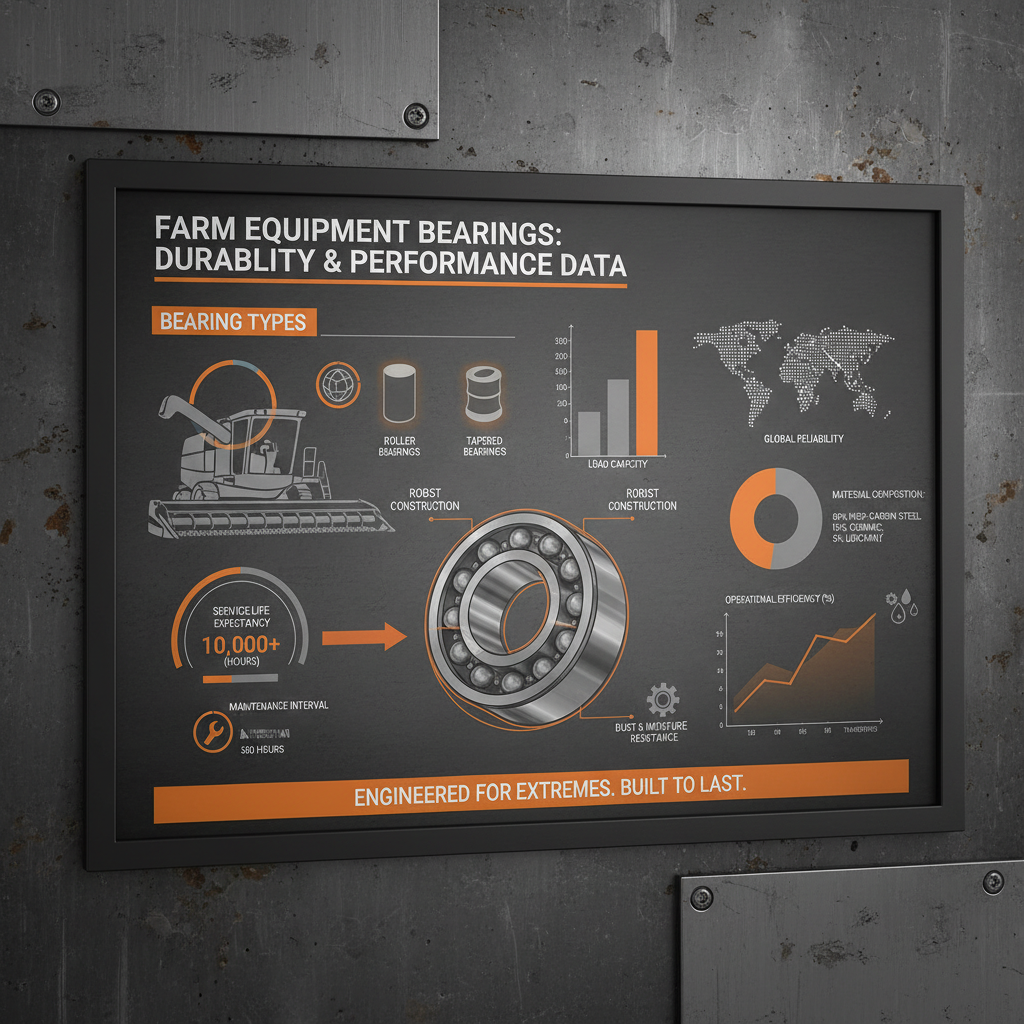
The agricultural industry relies heavily on robust machinery to maximize crop yields and efficiency. At the heart of this machinery lie farm equipment bearings, quietly providing the foundation for smooth operation. These bearings are not simply off-the-shelf components; they’re engineered to withstand the unique demands of the farming environment – heavy loads, constant vibration, exposure to dust, dirt, and moisture.
Without reliable bearings, tractors stall, combines seize, and planters malfunction, leading to significant financial losses for farmers. The cost of downtime can far outweigh the initial investment in quality farm equipment bearings. Therefore, selecting the right bearing for the application is paramount for minimizing maintenance, maximizing lifespan, and ensuring optimal performance.
The lifespan of farm equipment bearings varies greatly depending on operating conditions, maintenance practices, and the bearing type. Generally, with proper lubrication and maintenance, a quality bearing can last anywhere from 500 to 2000 operating hours. However, factors like exposure to contaminants, shock loading, and excessive temperatures can significantly reduce this lifespan. Regular inspections and proactive replacements are crucial to prevent unexpected failures.
Lubrication frequency depends on the bearing type, operating conditions, and lubricant type. Generally, bearings should be lubricated every 50-200 operating hours, or as recommended by the equipment manufacturer. Over-lubrication can be just as detrimental as under-lubrication, so it's important to use the correct amount of lubricant. Automatic lubrication systems can ensure consistent and optimal lubrication levels.
Common signs of a failing bearing include unusual noises (grinding, squealing, or clicking), excessive vibration, overheating, and reduced performance. If you notice any of these symptoms, it’s essential to inspect the bearing immediately. Ignoring these signs can lead to catastrophic failure and costly repairs.
For high-load applications in tractors, tapered roller bearings and spherical roller bearings are typically the best choices. Tapered roller bearings excel at handling radial and axial loads, while spherical roller bearings can accommodate misalignment, which is common in agricultural equipment. Selecting the right bearing depends on the specific load conditions and operating environment.
Protecting bearings from contamination is crucial for extending their lifespan. Use high-quality seals to prevent dust, dirt, and water from entering the bearing. Regularly clean the surrounding area to remove debris. Consider using bearing protectors or housings to shield the bearings from direct exposure to harsh elements. Proper sealing and cleaning practices are essential for maintaining optimal performance.
Yes, advancements in bearing materials are continuously improving durability. Materials like ceramic hybrid bearings and those utilizing advanced steel alloys offer superior wear resistance, corrosion protection, and load capacity. These materials are particularly beneficial in harsh agricultural environments where bearings are exposed to demanding conditions.
In conclusion, farm equipment bearings are fundamental to the efficiency, reliability, and sustainability of modern agriculture. Selecting the right bearing type, implementing proactive maintenance practices, and staying abreast of technological advancements are essential for maximizing equipment performance and minimizing downtime. Investing in quality farm equipment bearings is not just a cost; it's an investment in the future of food production.
As the agricultural sector continues to evolve, the demand for robust and innovative bearing solutions will only increase. By embracing new technologies and prioritizing preventative maintenance, farmers and agricultural businesses can ensure their equipment operates at peak performance, contributing to a more sustainable and productive food supply chain. Visit our website at www.arybearing.com to learn more about our range of high-quality farm equipment bearings.

 Afrikaans
 Albanian
 Amharic
 Arabic
 Armenian
 Azerbaijani
 Basque
 Belarusian
 Bengali
 Bosnian
 Bulgarian
 Catalan
 Cebuano
 Corsican
 Croatian
 Czech
Czech
 Danish
 Dutch
Dutch
 Esperanto
 Estonian
 Finnish
 French
 Frisian
 Galician
 Georgian
 German
 Greek
Greek
 Gujarati
 Haitian Creole
 Hausa
Hausa
 Hawaiian
 Hebrew
 Hindi
Hindi
 Miao
Miao
 Hungarian
 Icelandic
 Igbo
Igbo
 Indonesian
 Irish
Irish
 Italian
 Japanese
 Javanese
 Kannada
 Kazakh
 Khmer
Khmer
 Rwandese
 Korean
 Kurdish
 Kyrgyz
 Lao
Lao
 Latin
Latin
 Latvian
 Lithuanian
 Luxembourgish
 Macedonian
 Malgashi
 Malay
Malay
 Malayalam
 Maltese
 Maori
Maori
 Marathi
 Mongolian
 Myanmar
 Nepali
 Norwegian
 Norwegian
 Occitan
 Pashto
 Persian
 Polish
 Portuguese
 Punjabi
 Romanian
 Russian
 Samoan
 Scottish Gaelic
 Serbian
 Sesotho
 Shona
Shona
 Sindhi
 Sinhala
 Slovak
 Slovenian
 Somali
 Spanish
 Sundanese
 Swahili
 Swedish
 Tagalog
 Tajik
Tajik
 Tamil
Tamil
 Tatar
Tatar
 Telugu
 Thai
Thai
 Turkish
 Turkmen
 Ukrainian
 Urdu
Urdu
 Uighur
 Uzbek
Uzbek
 Vietnamese
 Welsh
Welsh
 Bantu
Bantu
 Yiddish
 Yoruba
 Zulu
Zulu
 English