
Feb . 27, 2026 02:05 Back to list
Comprehensive Guide to Bearing 6312 Dimensions and Industrial Applications
Understanding Bearing 6312 Dimensions and Applications
The bearing 6312 is a widely used ball bearing crucial in various industrial applications. Understanding its dimensions, specifications, and applications is essential for engineers, maintenance personnel, and anyone involved in rotating machinery. This article provides a comprehensive guide to the 6312 bearing, covering its core dimensions, load capacity, common uses, and how to select the right bearing for your needs. Choosing the correct bearing ensures optimal performance and longevity of equipment. Explore our range of high-quality bearings at ARY Bearing.
Key Dimensions of a 6312 Bearing
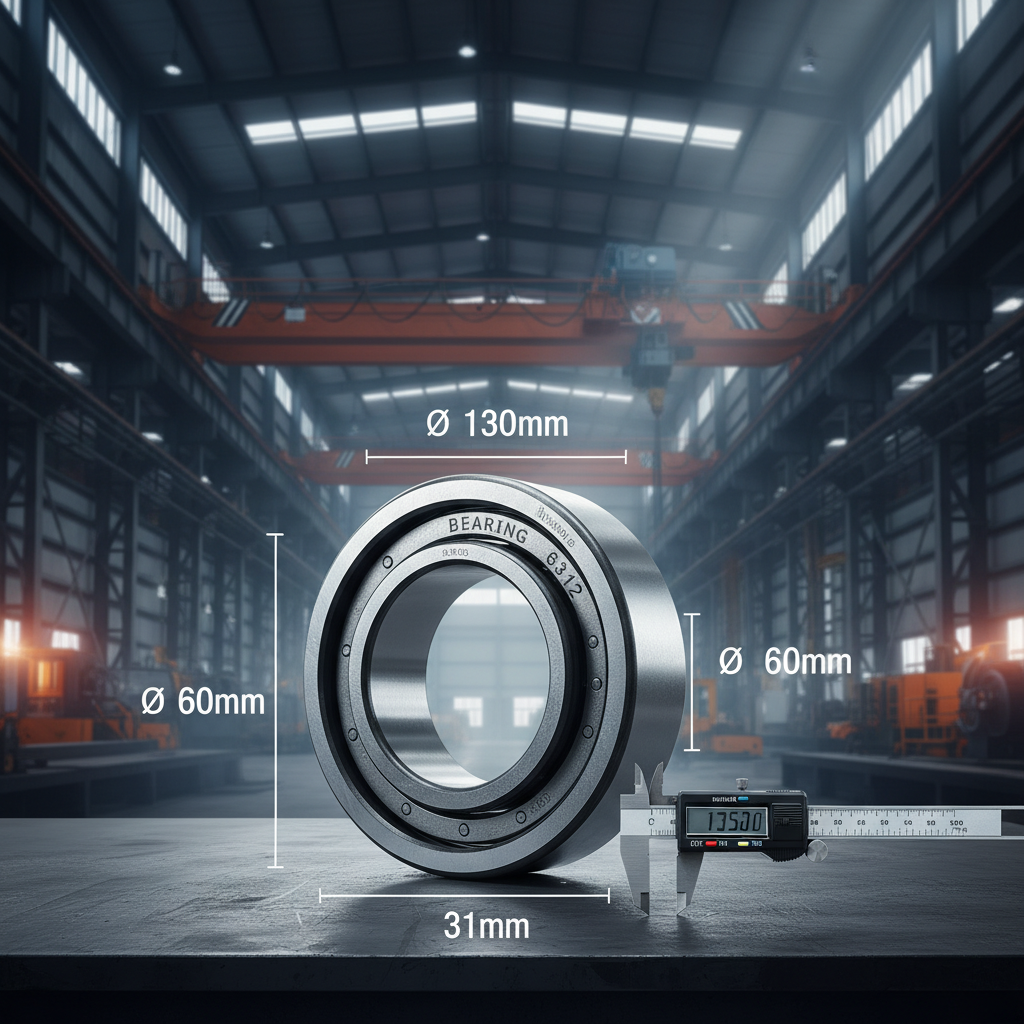
The 6312 bearing is a deep groove ball bearing with specific dimensions that dictate its compatibility and performance. The most critical dimensions include the bore diameter, outer diameter, and width. These dimensions are standardized to ensure interchangeability across manufacturers. Precise measurements are crucial for proper fitting and to prevent premature failure. A properly sized bearing minimizes vibration and noise, extending the life of the connected machinery. The bearing 6312 dimensions are fundamental to its functionality.
Key Highlights: The 6312 bearing dimensions are consistently maintained to provide interchangeability and reliability. Accurate measurements are critical for optimal performance.
Detailed 6312 Bearing Specifications
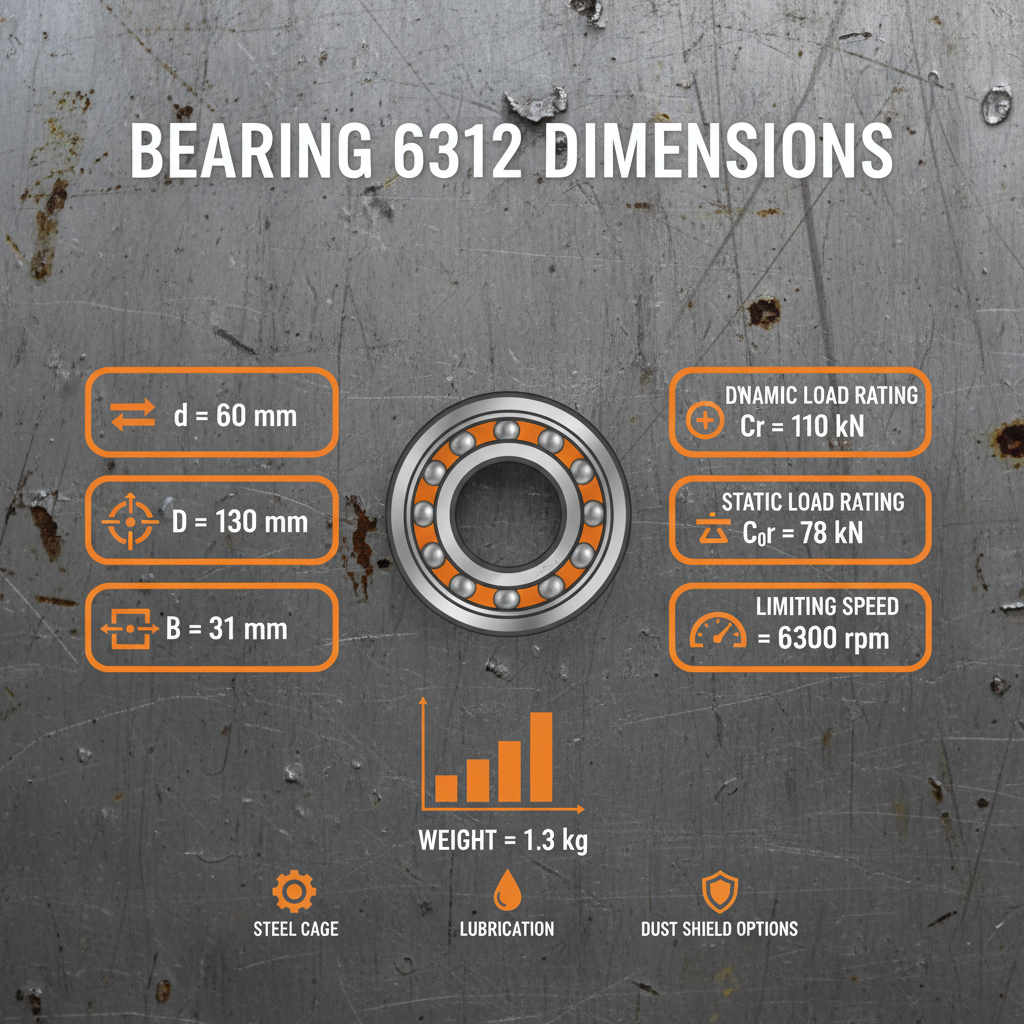
Here’s a detailed breakdown of the 6312 bearing specifications, including essential parameters like static load rating, dynamic load rating, and limiting speeds. Understanding these values helps engineers select the correct bearing for the anticipated load and operating conditions. Choosing a bearing with adequate load capacity is essential for preventing fatigue failure and ensuring long-term reliability. The quality of the steel and manufacturing process also play a vital role in bearing performance. ARY Bearing provides bearings manufactured to the highest standards.
Common Applications of the 6312 Bearing
The bearing 6312 finds widespread use across diverse industries due to its versatility and reliable performance. Common applications include electric motors, pumps, gearboxes, industrial fans, and various types of machinery. Its ability to handle both radial and axial loads makes it a suitable choice for many rotating components. Properly lubricated 6312 bearings contribute to reduced friction and improved energy efficiency. Regular maintenance, including relubrication, is critical for extending bearing life and preventing unexpected downtime.
Application Benefits:
• Versatile for a wide range of applications
• Reliable performance under various loads
• Contributes to energy efficiency when properly lubricated
6312 Bearing vs. Similar Size Bearings: A Comparative Analysis
While several bearings share similar dimensions, the 6312 stands out due to its specific load capacity and operating characteristics. Comparing it to other common bearings, such as the 6212, highlights its unique advantages. The 6312, with its larger bore diameter, is designed for applications requiring greater shaft diameters and heavier loads. Understanding these differences is crucial for making the right bearing selection. ARY Bearing offers a complete range of bearing sizes and types to meet your specific needs.
Selecting the Right Lubricant for Your 6312 Bearing
Choosing the appropriate lubricant is critical for maximizing the lifespan and performance of your 6312 bearing. The type of lubricant depends on factors such as operating speed, temperature, and load conditions. Common lubricant options include lithium-based greases, synthetic oils, and solid lubricants. Proper lubrication reduces friction, prevents wear, and dissipates heat. Regularly inspecting and replenishing the lubricant is essential for maintaining optimal bearing performance. ARY Bearing can provide guidance on lubricant selection.
Conclusion: Ensuring Optimal Performance with the Right 6312 Bearing
Selecting the right bearing 6312 for your application requires careful consideration of its dimensions, load capacity, and operating conditions. By understanding these factors and choosing a high-quality bearing from a reputable supplier like ARY Bearing, you can ensure optimal performance, reliability, and longevity of your equipment.
Frequently Asked Questions (FAQs)
What materials are 6312 bearings typically made of?
The most common material for 6312 bearings is high-carbon chrome steel (AISI 52100). This steel provides excellent hardness, wear resistance, and fatigue strength. However, other materials, such as stainless steel (for corrosion resistance) and ceramic (for high-speed applications), can also be used. The ball retainer is often made from polyamide or brass. The choice of material depends on the specific application and operating environment.
What is the typical service life of a 6312 bearing?
The service life of a 6312 bearing varies greatly depending on operating conditions, load, speed, lubrication, and maintenance. With proper lubrication and within the specified load limits, a 6312 bearing can last for several years. However, in harsh environments or under heavy loads, the lifespan may be significantly reduced. Regular inspections and relubrication are crucial for maximizing bearing life. The L10 life, which represents the life that 90% of a group of bearings will reach or exceed, is often used to estimate bearing lifespan.
How do I determine the correct load rating for my application?
Determining the correct load rating requires a thorough understanding of the forces acting on the bearing. You need to consider both radial loads (forces perpendicular to the shaft) and axial loads (forces parallel to the shaft). The equivalent dynamic load is calculated based on these forces. This value should be less than the bearing’s dynamic load rating (C) to ensure a satisfactory service life. Consult with a bearing specialist or use bearing life calculation software for more complex applications.
Can a 6312 bearing be used in high-temperature environments?
While 6312 bearings can operate at elevated temperatures, they have limitations. The standard operating temperature range is typically up to 150°C (302°F). At higher temperatures, the bearing's lubrication can degrade, reducing its load capacity and lifespan. For high-temperature applications, special bearings with high-temperature lubricants and materials are required. These bearings may utilize ceramic balls or special steel alloys designed to withstand extreme temperatures.
Latest news
-
Professional Deep Groove Ball Bearing Supplier for Industrial Use
NewsApr.16,2026
-
Essential Guide to Deep Groove Ball Bearing Size Chart PDF
NewsApr.09,2026
-
Exploring the Deep Groove Ball Bearing Series for Optimal Performance
NewsApr.07,2026
-
Understanding Deep Groove Ball Bearing Imperial Sizes for Optimal Performance
NewsApr.04,2026
-
Comprehensive Deep Groove Ball Bearing Catalogue PDF Guide for Optimal Performance
NewsMar.31,2026
-
Deep Groove Ball Bearings Applications and Comprehensive Usage Guide
NewsMar.28,2026
 Afrikaans
 Albanian
 Amharic
 Arabic
 Armenian
 Azerbaijani
 Basque
 Belarusian
 Bengali
 Bosnian
 Bulgarian
 Catalan
 Cebuano
 Corsican
 Croatian
 Czech
Czech
 Danish
 Dutch
Dutch
 Esperanto
 Estonian
 Finnish
 French
 Frisian
 Galician
 Georgian
 German
 Greek
Greek
 Gujarati
 Haitian Creole
 Hausa
Hausa
 Hawaiian
 Hebrew
 Hindi
Hindi
 Miao
Miao
 Hungarian
 Icelandic
 Igbo
Igbo
 Indonesian
 Irish
Irish
 Italian
 Japanese
 Javanese
 Kannada
 Kazakh
 Khmer
Khmer
 Rwandese
 Korean
 Kurdish
 Kyrgyz
 Lao
Lao
 Latin
Latin
 Latvian
 Lithuanian
 Luxembourgish
 Macedonian
 Malgashi
 Malay
Malay
 Malayalam
 Maltese
 Maori
Maori
 Marathi
 Mongolian
 Myanmar
 Nepali
 Norwegian
 Norwegian
 Occitan
 Pashto
 Persian
 Polish
 Portuguese
 Punjabi
 Romanian
 Russian
 Samoan
 Scottish Gaelic
 Serbian
 Sesotho
 Shona
Shona
 Sindhi
 Sinhala
 Slovak
 Slovenian
 Somali
 Spanish
 Sundanese
 Swahili
 Swedish
 Tagalog
 Tajik
Tajik
 Tamil
Tamil
 Tatar
Tatar
 Telugu
 Thai
Thai
 Turkish
 Turkmen
 Ukrainian
 Urdu
Urdu
 Uighur
 Uzbek
Uzbek
 Vietnamese
 Welsh
Welsh
 Bantu
Bantu
 Yiddish
 Yoruba
 Zulu
Zulu
 English