Selecting the right components for industrial machinery often begins with a comprehensive deep groove ball bearing catalogue, which serves as the blueprint for mechanical efficiency and longevity. These bearings are the most widely used type of rolling element bearing due to their versatility, ability to handle both radial and axial loads, and their relatively low friction coefficients. For engineers and procurement specialists, understanding the nuances of a technical catalogue is the difference between a system that lasts a decade and one that fails prematurely.
In the global landscape of the general equipment manufacturing industry, the standardization of bearings—governed by ISO and DIN norms—ensures that components are interchangeable across borders. A detailed deep groove ball bearing catalogue provides critical data on inner and outer diameters, width, dynamic load ratings, and limiting speeds, allowing for precise calculations of bearing life (L10 life) under specific operating conditions.
Beyond simple dimensions, the modern industrial context demands a deeper look at materials, seal types, and lubricant compatibility. Whether you are maintaining high-speed electric motors or complex greenhouse automation systems, leveraging a professional deep groove ball bearing catalogue ensures that the chosen bearing optimizes the balance between cost, performance, and operational safety.
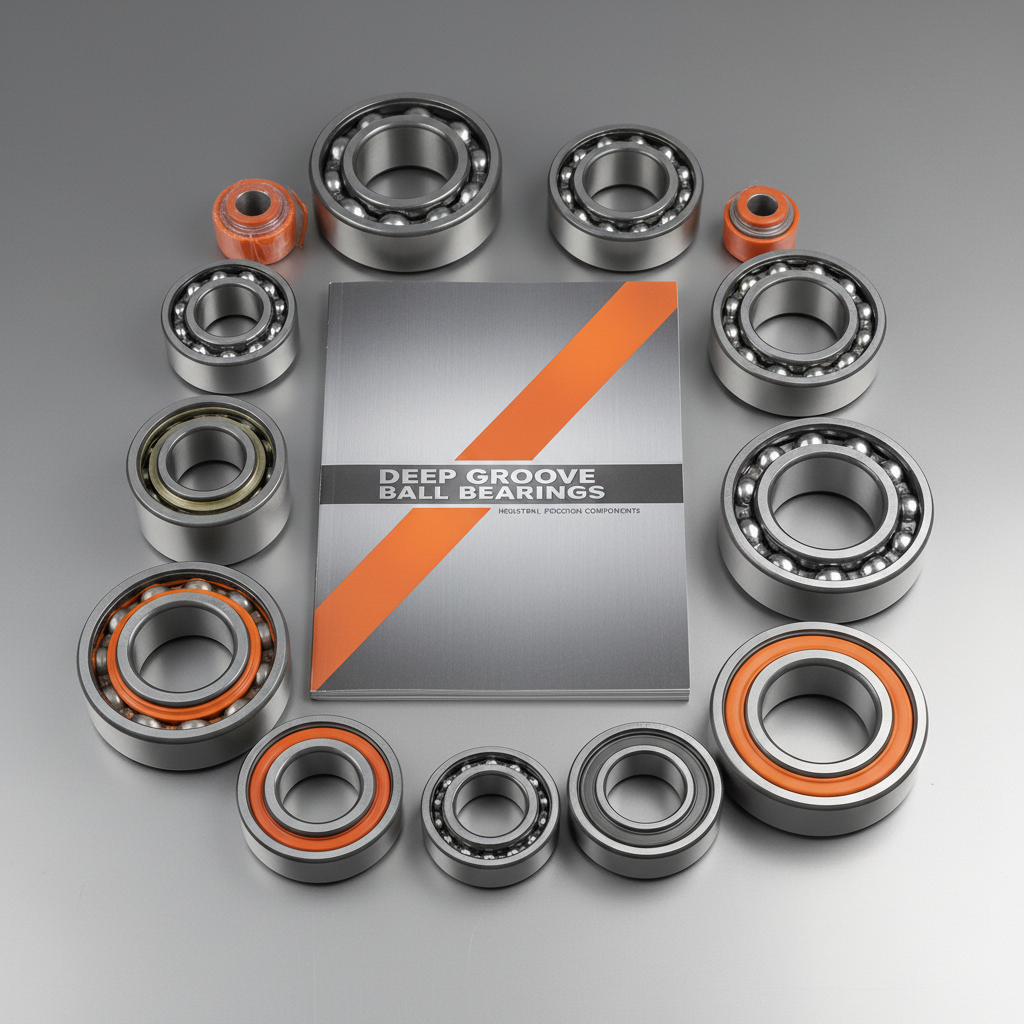
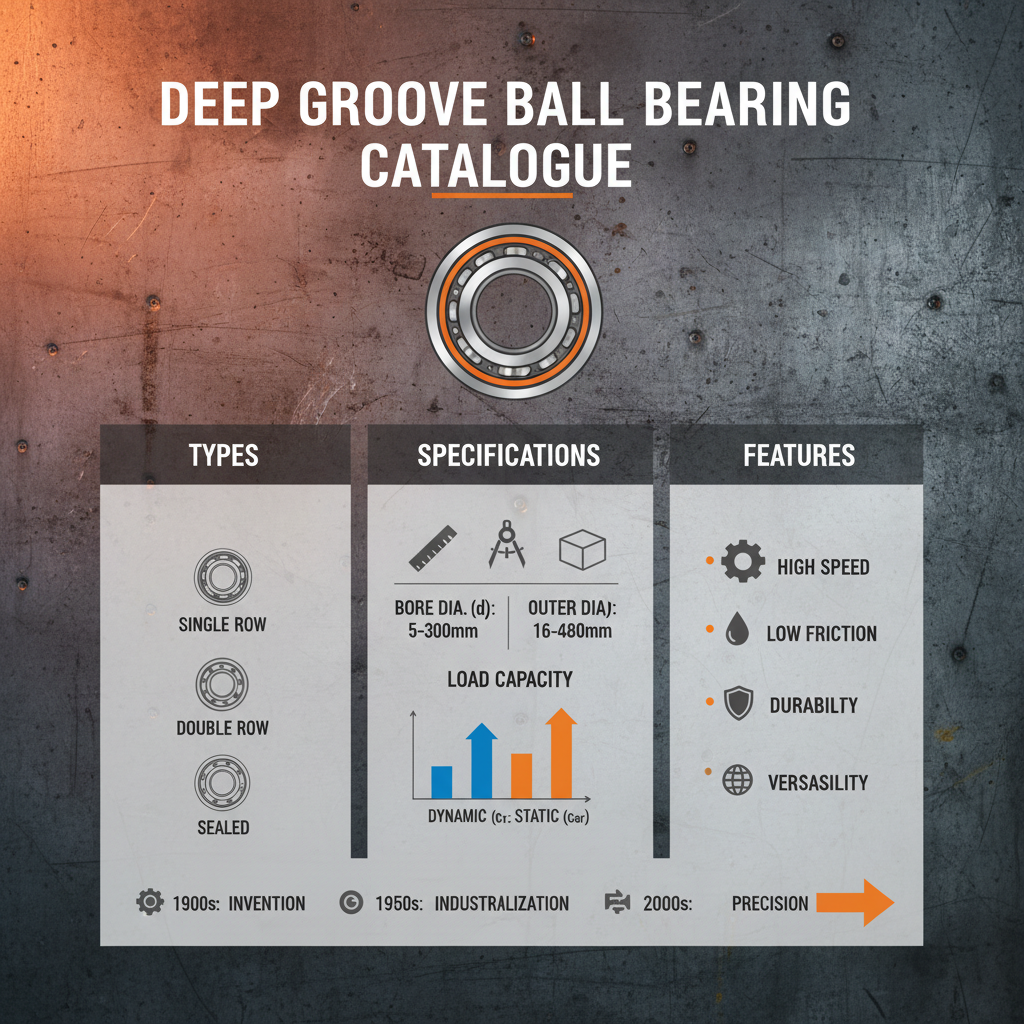
The global machinery market relies heavily on the ubiquity of deep groove ball bearings. According to ISO standards, the precision of these components is paramount to reducing energy loss in rotating machinery. With the rise of Industry 4.0, the demand for high-precision components listed in a deep groove ball bearing catalogue has surged, as automation requires tighter tolerances to maintain synchronization and reduce vibration.
However, the industry faces a critical challenge: the gap between theoretical load ratings and real-world environmental stressors. Many failures occur not because the bearing was undersized, but because the specific variant selected from the catalogue did not account for contamination or thermal expansion, highlighting the need for expert guidance when navigating technical specifications.
To choose correctly, first identify your primary load (radial vs. axial) and the magnitude of that load. Then, check the speed requirements to ensure the bearing won't overheat. Finally, consider the environment—use ZZ shields for dust protection or 2RS seals for moisture and contamination. Always verify the internal clearance (e.g., C3 for high-heat applications) to avoid premature seizing.
ZZ refers to metal shields on both sides, which are excellent for keeping larger debris out and allowing higher speeds due to lower friction. 2RS refers to rubber seals on both sides, which provide a nearly airtight seal against moisture and fine dust but introduce more friction, slightly reducing the maximum permissible speed compared to ZZ variants.
Yes, they can, but their primary design is for radial loads. They can handle axial loads in both directions, but the capacity is significantly lower than the radial capacity. If your application involves heavy thrust loads, you should consider an Angular Contact Ball Bearing or a Thrust Ball Bearing from the wider bearing catalogue.
C3 indicates an internal clearance that is greater than "Normal" (CN). This is critical for applications where the bearing is expected to heat up during operation, as the inner ring expands more than the outer ring. The C3 clearance prevents the bearing from becoming too tight (preloaded) as it reaches operating temperature, thus avoiding failure.
Stainless steel bearings are essential for environments where corrosion is a risk, such as in chemical processing, food production, or medical devices. While they have a slightly lower load capacity than GCr15 chrome steel, they offer superior resistance to oxidation and chemicals, ensuring longevity in harsh conditions.
Catalogue ratings (L10 life) provide a theoretical baseline where 90% of bearings will survive. However, actual life depends on lubrication and installation. We recommend implementing vibration analysis or temperature monitoring to detect early wear. When vibration levels exceed the ISO 10816 thresholds, it's time for replacement regardless of the theoretical catalogue life.
Navigating a deep groove ball bearing catalogue is an essential skill for any professional in the mechanical manufacturing sector. By understanding the interplay between load ratings, seal types, and internal clearances, engineers can significantly enhance the reliability and efficiency of their machinery. From the smallest electric motor to the most complex industrial automation system, the right bearing choice minimizes energy loss and maximizes operational uptime.
As the industry moves toward smarter, more sustainable components, the role of technical documentation will only grow in importance. We encourage procurement officers and engineers to look beyond basic dimensions and consider the long-term value of precision and material science. To find the perfect match for your machinery and access a comprehensive range of high-quality components, visit our website: www.arybearing.com.

 Afrikaans
 Albanian
 Amharic
 Arabic
 Armenian
 Azerbaijani
 Basque
 Belarusian
 Bengali
 Bosnian
 Bulgarian
 Catalan
 Cebuano
 Corsican
 Croatian
 Czech
Czech
 Danish
 Dutch
Dutch
 Esperanto
 Estonian
 Finnish
 French
 Frisian
 Galician
 Georgian
 German
 Greek
Greek
 Gujarati
 Haitian Creole
 Hausa
Hausa
 Hawaiian
 Hebrew
 Hindi
Hindi
 Miao
Miao
 Hungarian
 Icelandic
 Igbo
Igbo
 Indonesian
 Irish
Irish
 Italian
 Japanese
 Javanese
 Kannada
 Kazakh
 Khmer
Khmer
 Rwandese
 Korean
 Kurdish
 Kyrgyz
 Lao
Lao
 Latin
Latin
 Latvian
 Lithuanian
 Luxembourgish
 Macedonian
 Malgashi
 Malay
Malay
 Malayalam
 Maltese
 Maori
Maori
 Marathi
 Mongolian
 Myanmar
 Nepali
 Norwegian
 Norwegian
 Occitan
 Pashto
 Persian
 Polish
 Portuguese
 Punjabi
 Romanian
 Russian
 Samoan
 Scottish Gaelic
 Serbian
 Sesotho
 Shona
Shona
 Sindhi
 Sinhala
 Slovak
 Slovenian
 Somali
 Spanish
 Sundanese
 Swahili
 Swedish
 Tagalog
 Tajik
Tajik
 Tamil
Tamil
 Tatar
Tatar
 Telugu
 Thai
Thai
 Turkish
 Turkmen
 Ukrainian
 Urdu
Urdu
 Uighur
 Uzbek
Uzbek
 Vietnamese
 Welsh
Welsh
 Bantu
Bantu
 Yiddish
 Yoruba
 Zulu
Zulu
 English