Selecting the correct deep groove ball bearing sizes is a critical engineering decision that directly influences the operational efficiency, longevity, and safety of rotating machinery. As the most widely used bearing type globally, these components provide the necessary support for radial and axial loads, making their precise dimensioning essential for everything from household appliances to heavy industrial turbines.
In the modern manufacturing landscape, the standardization of deep groove ball bearing sizes ensures interchangeability across different brands and regions, adhering to strict ISO and ANSI standards. This global synchronization reduces downtime and simplifies supply chain management, allowing engineers to design systems with confidence knowing that replacement parts will fit perfectly regardless of the manufacturer.
However, the challenge lies in balancing size with load capacity and speed ratings. Miscalculating the required dimensions can lead to premature wear, overheating, or catastrophic mechanical failure. Understanding the nuances of how different sizes affect frictional torque and heat dissipation is key to optimizing machine performance and reducing long-term maintenance costs.
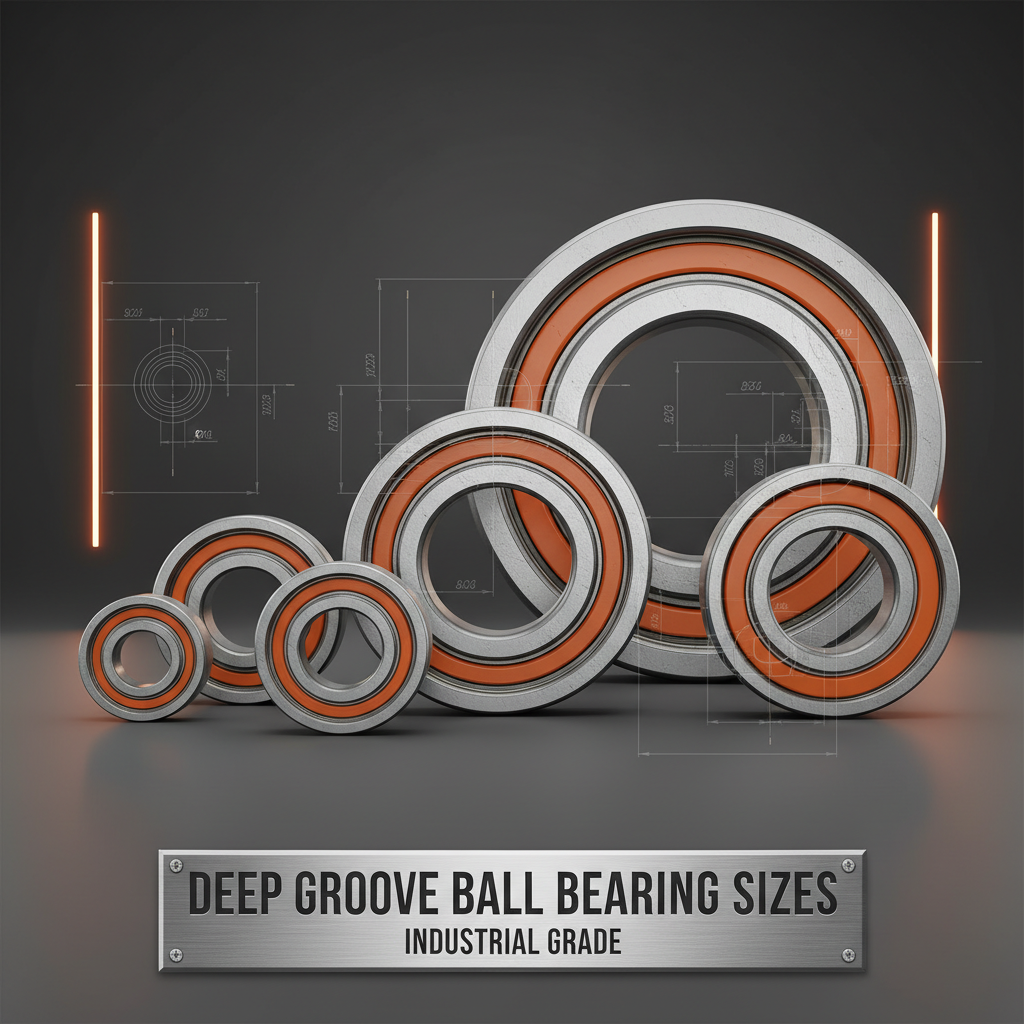
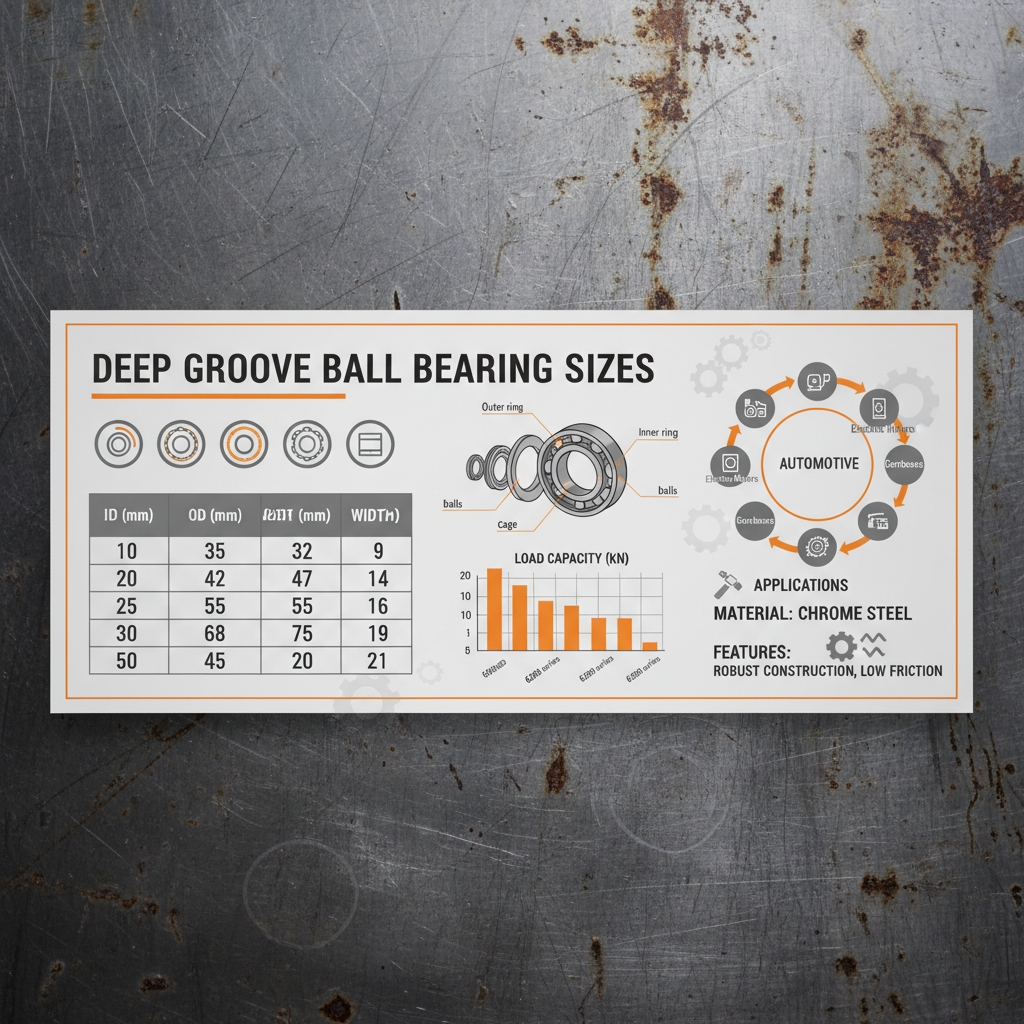
The global adoption of standardized deep groove ball bearing sizes is governed primarily by ISO (International Organization for Standardization). This ensures that a bearing with a specific bore diameter, outer diameter, and width will fit identically whether it is produced in Germany, Japan, or China. Such consistency is the backbone of the global machinery trade, enabling the seamless export of equipment and the availability of spare parts in remote industrial zones.
By adhering to these universal sizes, manufacturers can optimize their production lines and reduce the need for custom machining. This scalability allows for a rapid transition from prototype to mass production, as designers can select from a vast catalog of existing sizes to meet their load and speed requirements without introducing unnecessary complexity into the assembly process.
To determine the correct size, you must first calculate the radial and axial loads the bearing will encounter. Once the load is known, consult the manufacturer's dynamic and static load ratings. Ensure the bore diameter matches your shaft and the outer diameter fits your housing. Consider operating speeds and temperature to decide if you need a standard steel bearing or a high-performance hybrid version.
No, it is highly discouraged. Deep groove ball bearing sizes are engineered to precise tolerances. Even a slight difference in size can lead to improper fitting, which causes misalignment, excessive vibration, and rapid failure. If a standard size is unavailable, it is better to machine the shaft or housing to accommodate a standard size rather than using an "almost-fit" component.
Metric sizes are the global standard (ISO) and are measured in millimeters. Imperial sizes are measured in inches and are more common in older American machinery. Because the dimensions are not identical, they are not interchangeable. Always verify the measurement system of your equipment before ordering to ensure the bearing fits perfectly.
Generally, larger bearing sizes can handle loads more comfortably, which may reduce noise caused by deformation. However, larger balls can generate more centrifugal noise at extremely high speeds. The key to noise reduction is not just the size, but the precision grade (tolerance) and the quality of the lubricant used.
Not necessarily. While larger sizes typically have higher load capacities, durability depends on the "load-to-size" ratio. A small bearing that is perfectly matched to a light load will outlast a large bearing that is improperly lubricated or misaligned. Durability is a result of correct sizing, proper installation, and maintenance.
Comprehensive size charts are typically provided by ISO standards or leading manufacturers. You can find detailed technical catalogs on professional bearing supplier websites, such as www.arybearing.com, which list bore, OD, width, and load ratings for thousands of standardized combinations.
Understanding and applying the correct deep groove ball bearing sizes is more than a technical requirement; it is a strategic necessity for any operation relying on rotating machinery. From the foundational importance of ISO standardization to the cutting-edge integration of hybrid materials and smart sensors, the precision of bearing dimensions remains the pivot point upon which industrial efficiency turns. By balancing load capacity, speed, and space constraints, engineers can ensure the maximum lifespan of their equipment and the safety of their operations.
As we move toward an era of automation and green energy, the demand for even more precise and sustainable bearing solutions will grow. We recommend that procurement managers and engineers regularly audit their bearing specifications to ensure they are utilizing the most efficient sizes and materials available. For those seeking high-quality, standardized components that guarantee reliability and performance, we invite you to explore our extensive range of solutions. Visit our website: www.arybearing.com

 Afrikaans
 Albanian
 Amharic
 Arabic
 Armenian
 Azerbaijani
 Basque
 Belarusian
 Bengali
 Bosnian
 Bulgarian
 Catalan
 Cebuano
 Corsican
 Croatian
 Czech
Czech
 Danish
 Dutch
Dutch
 Esperanto
 Estonian
 Finnish
 French
 Frisian
 Galician
 Georgian
 German
 Greek
Greek
 Gujarati
 Haitian Creole
 Hausa
Hausa
 Hawaiian
 Hebrew
 Hindi
Hindi
 Miao
Miao
 Hungarian
 Icelandic
 Igbo
Igbo
 Indonesian
 Irish
Irish
 Italian
 Japanese
 Javanese
 Kannada
 Kazakh
 Khmer
Khmer
 Rwandese
 Korean
 Kurdish
 Kyrgyz
 Lao
Lao
 Latin
Latin
 Latvian
 Lithuanian
 Luxembourgish
 Macedonian
 Malgashi
 Malay
Malay
 Malayalam
 Maltese
 Maori
Maori
 Marathi
 Mongolian
 Myanmar
 Nepali
 Norwegian
 Norwegian
 Occitan
 Pashto
 Persian
 Polish
 Portuguese
 Punjabi
 Romanian
 Russian
 Samoan
 Scottish Gaelic
 Serbian
 Sesotho
 Shona
Shona
 Sindhi
 Sinhala
 Slovak
 Slovenian
 Somali
 Spanish
 Sundanese
 Swahili
 Swedish
 Tagalog
 Tajik
Tajik
 Tamil
Tamil
 Tatar
Tatar
 Telugu
 Thai
Thai
 Turkish
 Turkmen
 Ukrainian
 Urdu
Urdu
 Uighur
 Uzbek
Uzbek
 Vietnamese
 Welsh
Welsh
 Bantu
Bantu
 Yiddish
 Yoruba
 Zulu
Zulu
 English