
Mar . 17, 2026 02:05 Back to list
Comprehensive Guide to Deep Groove Ball Bearings Applications and Selection
Understanding Deep Groove Ball Bearings: A Comprehensive Guide
Deep groove ball bearings are arguably the most widely used type of rolling-element bearing. Their versatility, coupled with a relatively simple design, makes them suitable for a vast range of applications. From electric motors and pumps to automotive components and precision instruments, deep groove ball bearings play a crucial role in enabling smooth, efficient rotation. This article will delve into their construction, types, applications, and key considerations for selection and maintenance. Understanding these bearings can optimize performance and lifespan in your machinery.
How Deep Groove Ball Bearings Work
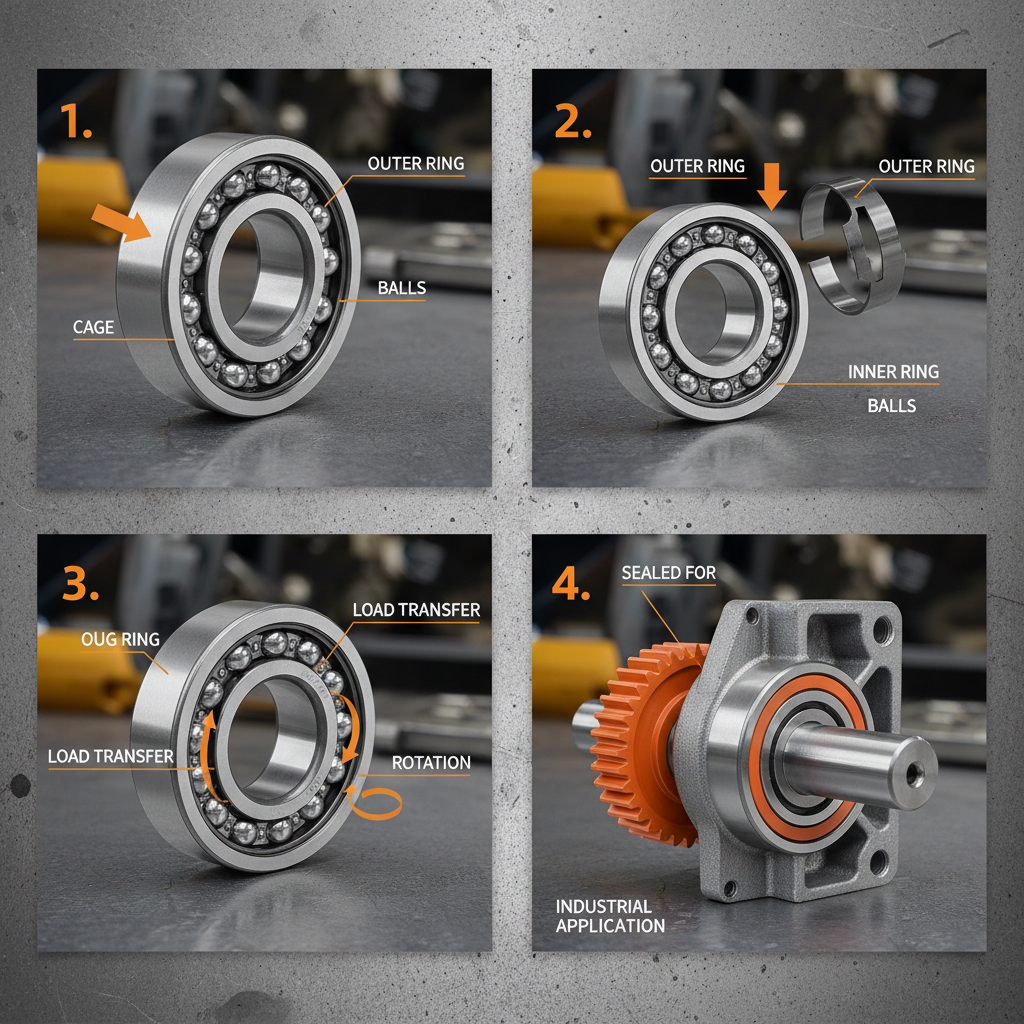
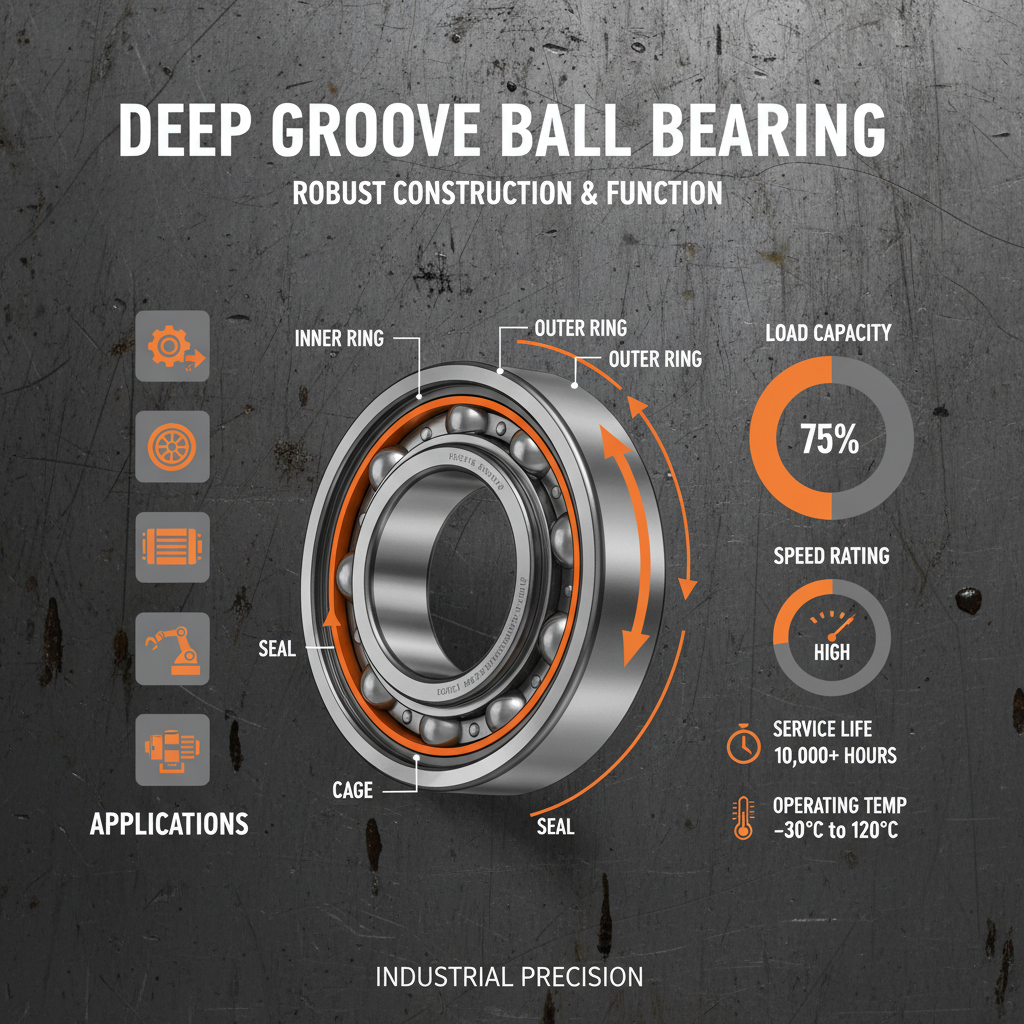
At their core, deep groove ball bearings consist of an inner ring, an outer ring, and a series of ball bearings that sit between them. The inner and outer rings have grooved races that provide a smooth surface for the balls to roll on. When a load is applied, the balls transmit the force between the rings, reducing friction and allowing for efficient rotation. The 'deep groove' design allows the bearing to support radial and some axial loads in both directions. They are typically manufactured from high-carbon chrome steel for optimal hardness and durability, but can also be found in stainless steel and ceramic materials depending on application requirements.
Key Benefits: Reduced friction, high-speed capability, radial and axial load support, versatile applications, and cost-effectiveness.
Types of Deep Groove Ball Bearings
While the fundamental principle remains the same, deep groove ball bearings come in various configurations to suit specific needs. Single-row bearings are the most common and are suitable for moderate loads and speeds. Double-row bearings offer increased load capacity but generally operate at lower speeds. There are also angular contact ball bearings which are designed to handle significant axial loads in one direction, often used in pairs to manage loads in both directions. Finally, shielded and sealed bearings offer varying levels of protection against contaminants, enhancing longevity and reducing maintenance.
Bearing Type Comparison:
• Single-Row: Moderate loads & speeds, general purpose.
• Double-Row: Higher load capacity, lower speeds.
• Angular Contact: High axial loads in one direction.
• Shielded/Sealed: Enhanced contamination protection.
Deep Groove Ball Bearing Applications: A Wide Range
The application scope for deep groove ball bearings is exceptionally broad. In the automotive industry, they are essential in wheel hubs, transmissions, and engines. Electric motors utilize them for rotor support. Household appliances like washing machines and vacuum cleaners rely on their smooth operation. They’re also critical in precision instruments, medical devices, and industrial machinery. The ability to handle varying speeds, loads, and environmental conditions makes them a default choice in countless engineering designs.
Selecting the Right Deep Groove Ball Bearing
Choosing the optimal deep groove ball bearing involves considering several factors. The expected load (radial and axial), operating speed, temperature, and environmental conditions all play a crucial role. Understanding the lubrication requirements is also vital for longevity. Material selection, whether standard steel, stainless steel, or ceramic, depends on the operating environment and desired lifespan. Consulting bearing manufacturers' catalogs and technical specifications, like those found at ARY Bearing, is highly recommended.
Maintenance and Lifespan Considerations
Proper maintenance significantly extends the lifespan of deep groove ball bearings. Regular lubrication is paramount, ensuring minimal friction and preventing wear. Shielded or sealed bearings require less frequent lubrication but should still be inspected periodically. Monitoring bearing temperature and vibration can indicate potential issues early on. Avoid overloading the bearing, as this can lead to premature failure. And finally, protect bearings from contaminants like dust and moisture. Following these guidelines ensures reliable performance and maximizes return on investment.
Conclusion: The Versatility of Deep Groove Ball Bearings
Deep groove ball bearings are fundamental components in countless machines and systems. Their simplicity, versatility, and cost-effectiveness make them an indispensable part of modern engineering. By understanding their operating principles, types, and maintenance requirements, you can optimize their performance and ensure long-lasting reliability. For quality deep groove ball bearings and expert guidance, explore the extensive offerings at ARY Bearing.
Frequently Asked Questions (FAQs)
What is the maximum speed a deep groove ball bearing can achieve?
The maximum speed depends on factors like bearing size, load, lubrication, and operating temperature. Generally, smaller bearings can achieve higher speeds. However, exceeding the manufacturer’s recommended speed rating can lead to overheating, increased noise, and premature failure. Speed ratings are typically specified in revolutions per minute (RPM) and are based on a specific load. It’s crucial to consult the bearing’s technical specifications and application guidelines to determine a safe operating speed.
How do I choose the right lubricant for a deep groove ball bearing?
The lubricant should be compatible with the bearing material and operating conditions. Grease is commonly used for general-purpose applications, providing good lubrication and sealing. Oil lubrication is preferred for high-speed applications, offering better cooling and lower friction. Synthetic lubricants are recommended for extreme temperatures or harsh environments. Consider the viscosity, temperature range, and load-carrying capacity when selecting a lubricant. Consult the bearing manufacturer's recommendations for specific lubricant types.
What are the common causes of deep groove ball bearing failure?
Common causes include improper lubrication, contamination, overloading, misalignment, and fatigue. Insufficient lubrication leads to increased friction and wear. Contaminants can cause abrasive damage. Overloading exceeds the bearing’s capacity, leading to premature failure. Misalignment introduces stresses and accelerates wear. Fatigue occurs over time due to repeated stress cycles. Regular inspection and maintenance can help identify and address these issues before they lead to bearing failure.
Can deep groove ball bearings handle axial loads?
While primarily designed for radial loads, deep groove ball bearings can also handle some axial loads. However, their axial load capacity is limited compared to angular contact ball bearings or thrust bearings. The amount of axial load a deep groove ball bearing can handle depends on factors like bearing size, load direction, and operating speed. For applications with significant axial loads, it’s recommended to use specialized bearings designed for that purpose.
Latest news
-
Professional Deep Groove Ball Bearing Supplier for Industrial Use
NewsApr.16,2026
-
Essential Guide to Deep Groove Ball Bearing Size Chart PDF
NewsApr.09,2026
-
Exploring the Deep Groove Ball Bearing Series for Optimal Performance
NewsApr.07,2026
-
Understanding Deep Groove Ball Bearing Imperial Sizes for Optimal Performance
NewsApr.04,2026
-
Comprehensive Deep Groove Ball Bearing Catalogue PDF Guide for Optimal Performance
NewsMar.31,2026
-
Deep Groove Ball Bearings Applications and Comprehensive Usage Guide
NewsMar.28,2026
 Afrikaans
 Albanian
 Amharic
 Arabic
 Armenian
 Azerbaijani
 Basque
 Belarusian
 Bengali
 Bosnian
 Bulgarian
 Catalan
 Cebuano
 Corsican
 Croatian
 Czech
Czech
 Danish
 Dutch
Dutch
 Esperanto
 Estonian
 Finnish
 French
 Frisian
 Galician
 Georgian
 German
 Greek
Greek
 Gujarati
 Haitian Creole
 Hausa
Hausa
 Hawaiian
 Hebrew
 Hindi
Hindi
 Miao
Miao
 Hungarian
 Icelandic
 Igbo
Igbo
 Indonesian
 Irish
Irish
 Italian
 Japanese
 Javanese
 Kannada
 Kazakh
 Khmer
Khmer
 Rwandese
 Korean
 Kurdish
 Kyrgyz
 Lao
Lao
 Latin
Latin
 Latvian
 Lithuanian
 Luxembourgish
 Macedonian
 Malgashi
 Malay
Malay
 Malayalam
 Maltese
 Maori
Maori
 Marathi
 Mongolian
 Myanmar
 Nepali
 Norwegian
 Norwegian
 Occitan
 Pashto
 Persian
 Polish
 Portuguese
 Punjabi
 Romanian
 Russian
 Samoan
 Scottish Gaelic
 Serbian
 Sesotho
 Shona
Shona
 Sindhi
 Sinhala
 Slovak
 Slovenian
 Somali
 Spanish
 Sundanese
 Swahili
 Swedish
 Tagalog
 Tajik
Tajik
 Tamil
Tamil
 Tatar
Tatar
 Telugu
 Thai
Thai
 Turkish
 Turkmen
 Ukrainian
 Urdu
Urdu
 Uighur
 Uzbek
Uzbek
 Vietnamese
 Welsh
Welsh
 Bantu
Bantu
 Yiddish
 Yoruba
 Zulu
Zulu
 English