Milling machine bearings are critical components in modern manufacturing, enabling the precise and efficient removal of material to create a vast array of products. These bearings, often overlooked, directly impact the accuracy, speed, and longevity of milling operations. Understanding their functionality, types, and proper maintenance is essential for any engineer, machinist, or manufacturing professional. The global demand for high-quality milling machine bearings is constantly increasing, driven by growth in sectors like aerospace, automotive, and medical device manufacturing.
The importance of milling machine bearings extends beyond simply keeping the spindle rotating. They are integral to maintaining dimensional accuracy, minimizing vibration, and reducing thermal stress within the milling machine itself. Selecting the correct bearing type for a specific application—considering factors like load, speed, and environmental conditions—can significantly enhance productivity and reduce downtime. The advancements in bearing materials and designs are continuously pushing the boundaries of machining capabilities.
Investing in premium milling machine bearings isn't just about component replacement; it’s a strategic move to optimize overall production efficiency, improve product quality, and ultimately, boost a company’s bottom line. From small job shops to large-scale production facilities, the selection and upkeep of these crucial elements are paramount to success.
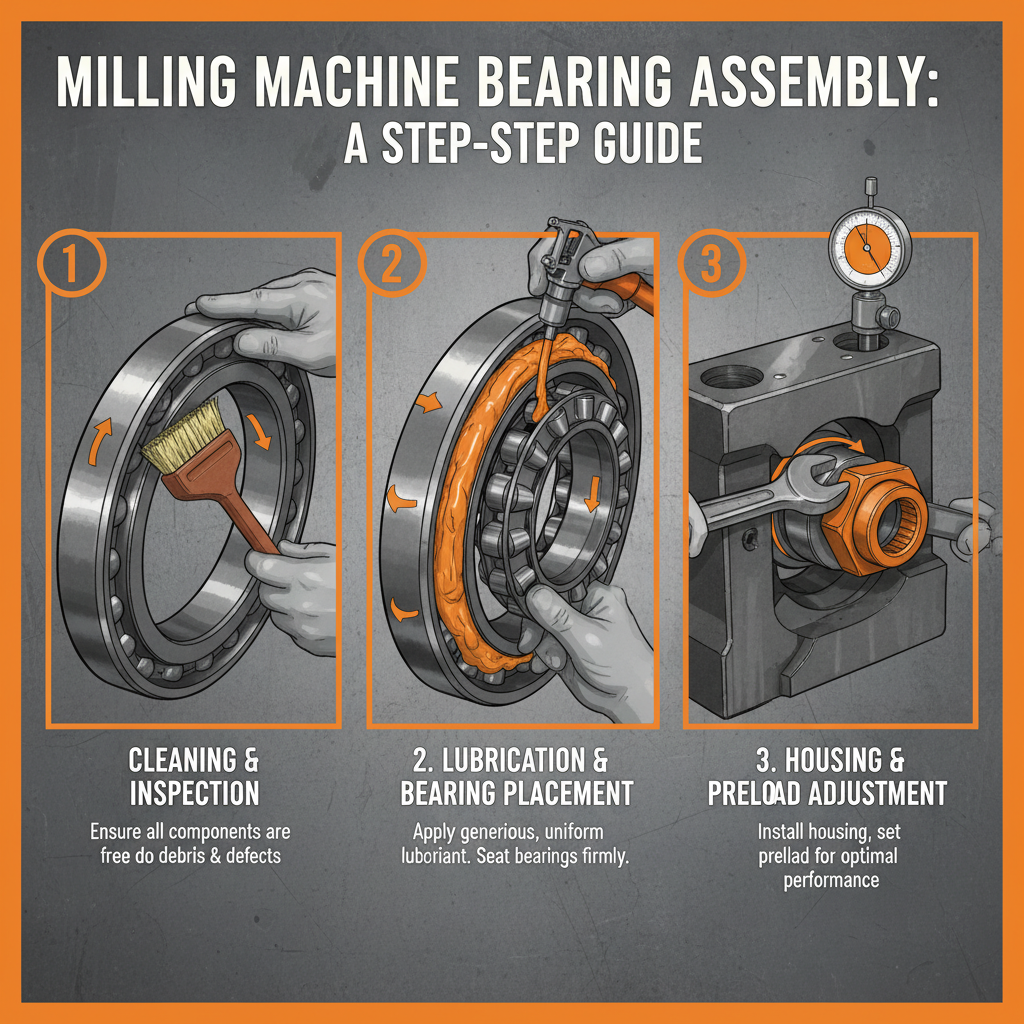
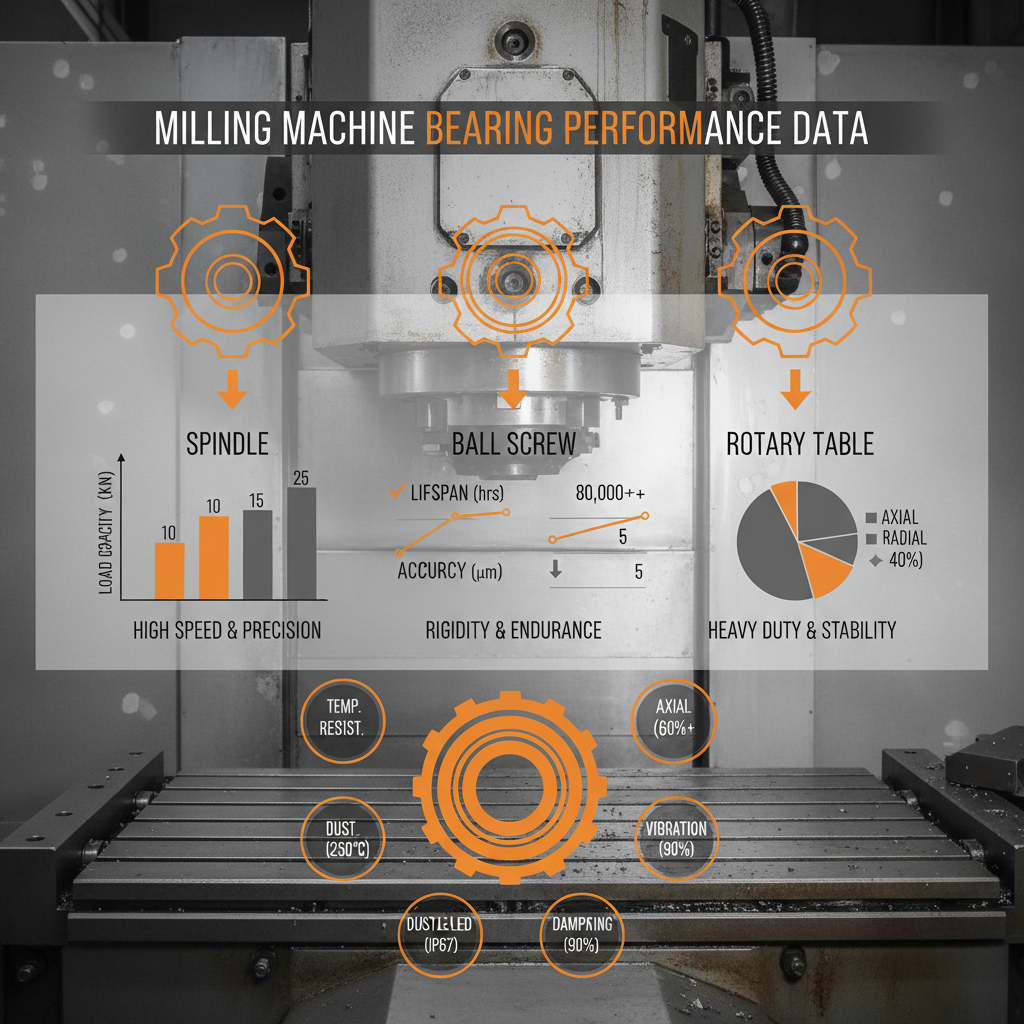
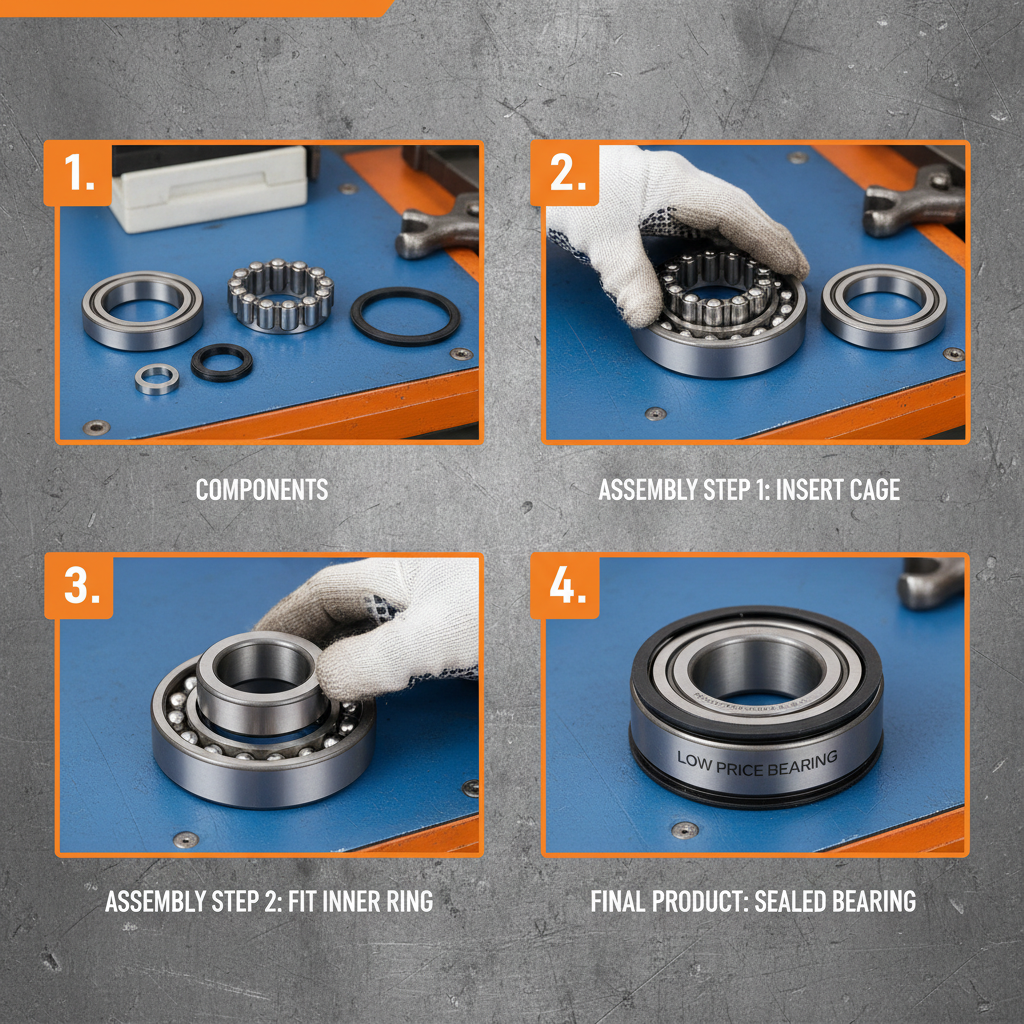
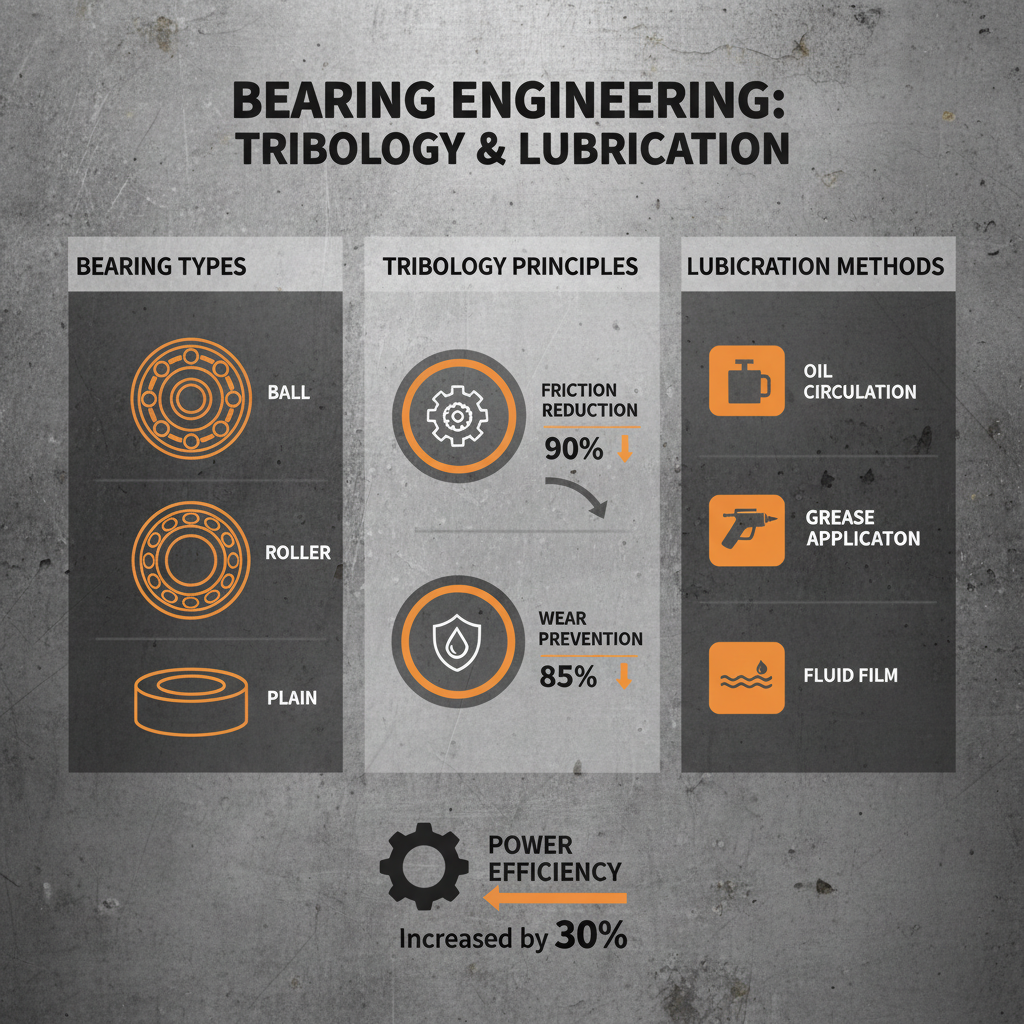
Milling machine bearings are designed to support the spindle and enable its high-speed rotation with minimal friction and vibration. They come in various configurations, each suited for specific milling applications and load conditions. Proper selection directly influences the machine's precision, surface finish, and overall lifespan.
The evolution of milling machine bearings has paralleled advancements in manufacturing technology. From simple sleeve bearings to sophisticated angular contact ball bearings and ceramic hybrid bearings, innovation continues to address increasing demands for higher speeds, greater accuracy, and improved reliability in modern machining processes.
The lifespan of a milling machine bearing varies widely depending on factors such as load, speed, lubrication, and operating environment. However, with proper maintenance and operating within specified limits, a high-quality bearing can typically last between 5,000 and 20,000 hours of operation. Regular monitoring and preventative maintenance are crucial for maximizing bearing life and preventing premature failure.
Lubrication frequency depends on the bearing type, load, speed, and operating conditions. Consult the bearing manufacturer's recommendations for specific guidelines. Generally, bearings should be re-lubricated every few months, or more frequently in demanding applications. Using the correct type of lubricant is also critical for optimal performance and longevity.
Common signs of bearing failure include increased noise, vibration, heat, and play in the spindle. Reduced machining accuracy and surface finish can also indicate a bearing problem. If you observe any of these symptoms, it's important to inspect the bearing immediately and replace it if necessary to prevent further damage.
Ceramic hybrid bearings offer several advantages, including higher speed capability, reduced heat generation, and increased resistance to corrosion. While they are more expensive than traditional steel bearings, they can be a worthwhile investment for high-performance applications where these benefits are critical. They are especially beneficial in demanding environments or with high spindle speeds.
Bearing preload refers to the initial load applied to the bearings. Proper preload is essential for maintaining spindle rigidity, minimizing vibration, and ensuring accurate machining. Insufficient preload can lead to play in the spindle, while excessive preload can increase friction and reduce bearing life. The optimal preload setting depends on the bearing type and application.
Sourcing from reputable bearing suppliers is vital to guarantee quality and reliability. Look for suppliers with a proven track record, technical expertise, and a wide selection of bearing types. Verify the bearings meet industry standards and offer appropriate warranties. Consider suppliers offering technical support and bearing selection assistance for optimal results.
In conclusion, milling machine bearings are fundamental components that underpin the precision, efficiency, and reliability of modern manufacturing processes. Selecting the correct bearing type, implementing a robust maintenance program, and embracing emerging technologies like predictive maintenance are crucial for maximizing uptime, reducing costs, and achieving optimal machining performance. Understanding the nuances of these essential parts is essential for any professional within the manufacturing ecosystem.
Looking ahead, continued innovation in bearing materials, designs, and monitoring systems will further enhance milling machine capabilities. Investing in high-quality milling machine bearings and prioritizing preventative maintenance aren’t merely expenses; they’re strategic investments in the long-term health and competitiveness of any manufacturing operation.

 Afrikaans
 Albanian
 Amharic
 Arabic
 Armenian
 Azerbaijani
 Basque
 Belarusian
 Bengali
 Bosnian
 Bulgarian
 Catalan
 Cebuano
 Corsican
 Croatian
 Czech
Czech
 Danish
 Dutch
Dutch
 Esperanto
 Estonian
 Finnish
 French
 Frisian
 Galician
 Georgian
 German
 Greek
Greek
 Gujarati
 Haitian Creole
 Hausa
Hausa
 Hawaiian
 Hebrew
 Hindi
Hindi
 Miao
Miao
 Hungarian
 Icelandic
 Igbo
Igbo
 Indonesian
 Irish
Irish
 Italian
 Japanese
 Javanese
 Kannada
 Kazakh
 Khmer
Khmer
 Rwandese
 Korean
 Kurdish
 Kyrgyz
 Lao
Lao
 Latin
Latin
 Latvian
 Lithuanian
 Luxembourgish
 Macedonian
 Malgashi
 Malay
Malay
 Malayalam
 Maltese
 Maori
Maori
 Marathi
 Mongolian
 Myanmar
 Nepali
 Norwegian
 Norwegian
 Occitan
 Pashto
 Persian
 Polish
 Portuguese
 Punjabi
 Romanian
 Russian
 Samoan
 Scottish Gaelic
 Serbian
 Sesotho
 Shona
Shona
 Sindhi
 Sinhala
 Slovak
 Slovenian
 Somali
 Spanish
 Sundanese
 Swahili
 Swedish
 Tagalog
 Tajik
Tajik
 Tamil
Tamil
 Tatar
Tatar
 Telugu
 Thai
Thai
 Turkish
 Turkmen
 Ukrainian
 Urdu
Urdu
 Uighur
 Uzbek
Uzbek
 Vietnamese
 Welsh
Welsh
 Bantu
Bantu
 Yiddish
 Yoruba
 Zulu
Zulu
 English