
Mar . 14, 2026 02:15 Back to list
Comprehensive Guide to Deep Bearing Selection and Applications
Understanding Deep Bearings: A Comprehensive Guide
Deep groove ball bearings are arguably the most widely used type of rolling-element bearing. Their versatility, coupled with a relatively simple design, makes them a staple in countless applications, from electric motors to automotive systems. At ARY Bearing, we specialize in providing high-quality deep bearings to meet a diverse range of industrial needs. This article delves into the key characteristics, applications, advantages, and considerations when selecting a deep bearing, offering a complete overview for engineers, purchasers, and anyone interested in this crucial mechanical component.

What are Deep Groove Ball Bearings?
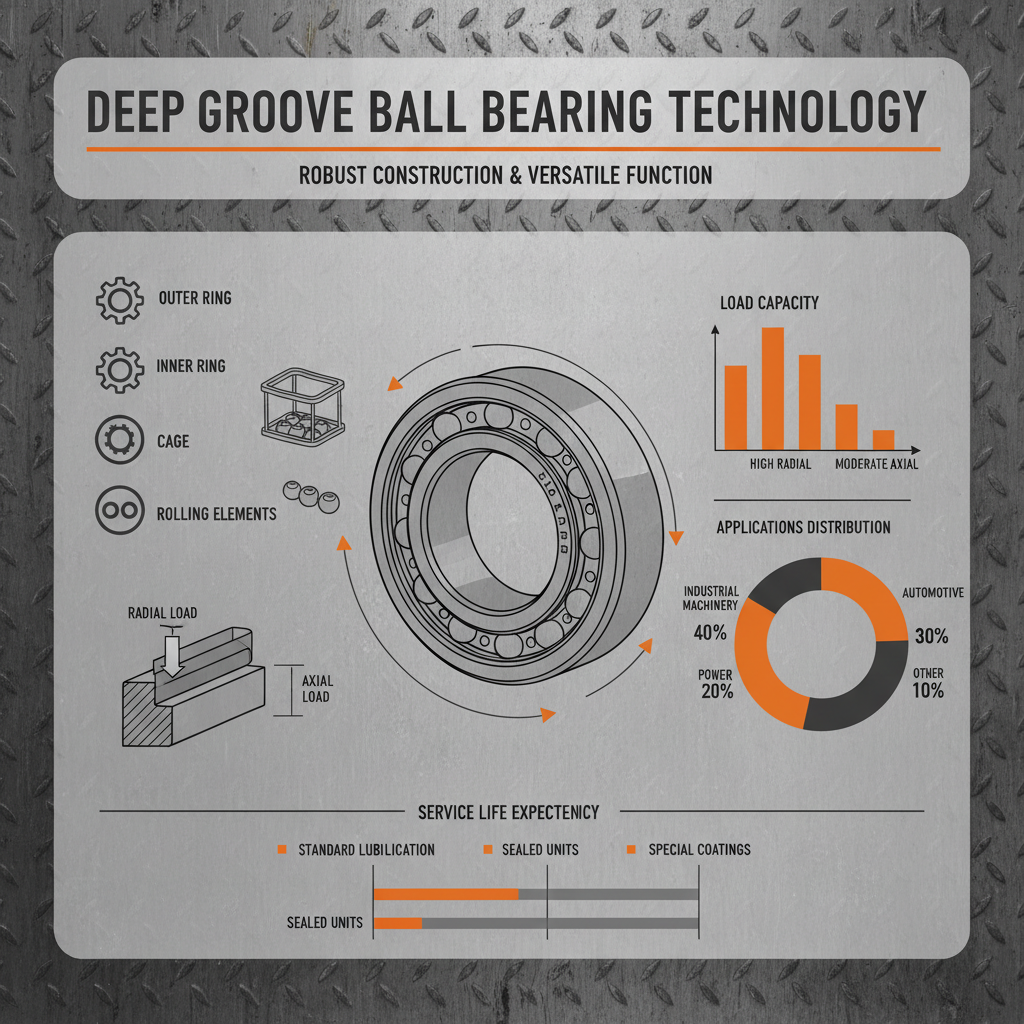
Deep groove ball bearings consist of an inner and outer ring with a series of ball bearings positioned between them. This design allows for smooth, efficient rotary motion while supporting radial and some axial loads. The "deep groove" refers to the shape of the raceways (the inner and outer tracks) which provide a large contact angle, contributing to the bearing’s high load-carrying capacity. These bearings are non-separable, meaning the inner and outer rings cannot be separated from the ball bearings. They are typically made from high-grade steel and can be available with various cage materials (like steel, nylon, or brass) to optimize performance for specific applications.
Key Characteristics: High load capacity, adaptability to various speeds, low friction, and relatively simple design.
Common Applications of Deep Bearings
The wide applicability of deep groove ball bearings stems from their versatile performance characteristics. They are commonly found in:
- Electric Motors: Supporting the rotor and ensuring smooth operation.
- Gearboxes: Handling radial and axial loads generated by gears.
- Automotive Industry: Wheel hubs, transmissions, and various auxiliary systems.
- Household Appliances: Washing machines, dryers, and vacuum cleaners.
- Industrial Machinery: Pumps, compressors, and conveyors.
Deep Bearing Selection: Key Considerations
Choosing the right deep groove ball bearing for a specific application requires careful consideration of several factors. Key parameters include load capacity, speed requirements, operating temperature, lubrication, and the presence of axial loads. Properly assessing these factors will ensure optimal performance and longevity of the bearing. For instance, higher speeds often necessitate bearings with specialized cage materials designed to minimize friction and heat generation.
Selection Factors:
• Load Capacity (Radial & Axial)
• Operating Speed
• Operating Temperature
• Lubrication Requirements
Deep Groove Ball Bearings vs. Other Bearing Types
While deep groove ball bearings are highly versatile, they aren't always the best choice for every application. Comparing them to other bearing types can help determine the most suitable solution. For example, tapered roller bearings excel at handling high axial loads, while cylindrical roller bearings are better suited for heavy radial loads. Here’s a simplified comparison:
ARY Bearing: Your Trusted Deep Bearing Supplier
At ARY Bearing, we are committed to providing our customers with high-quality deep groove ball bearings and exceptional service. We offer a wide range of sizes, materials, and precision classes to meet your specific application needs. We understand the importance of reliable components and strive to deliver products that consistently exceed expectations.
Conclusion: The Importance of Quality Deep Bearings
Investing in high-quality deep groove ball bearings from a reputable supplier like ARY Bearing ensures optimal performance, reduced downtime, and extended equipment life. We provide not only excellent products but also expert technical support to help you select the best bearing for your specific requirements.
Frequently Asked Questions (FAQs)
What is the maximum speed a deep groove ball bearing can achieve?
The maximum speed of a deep groove ball bearing depends on several factors, including bearing size, load, lubrication, and operating temperature. Generally, smaller bearings can achieve higher speeds than larger ones. High-speed bearings often utilize specialized cage materials, like polyamide or brass, to minimize friction and heat generation. Precise speed ratings are typically provided in the bearing manufacturer’s specifications and should be consulted for accurate guidance. Exceeding the recommended speed can lead to premature failure due to excessive heat and wear.
What type of lubrication is recommended for deep groove ball bearings?
The optimal lubrication for deep groove ball bearings depends on the operating conditions. Common choices include grease and oil. Grease is generally preferred for its long-lasting lubrication and ability to seal out contaminants. Oil lubrication is suitable for high-speed applications where efficient heat dissipation is crucial. The lubricant's viscosity should be selected based on the bearing speed, load, and temperature. Synthetic lubricants often provide superior performance in extreme temperatures and demanding applications. At ARY Bearing, we can advise on the best lubricant for your specific application.
Can deep groove ball bearings handle axial loads?
While deep groove ball bearings are primarily designed for radial loads, they can also accommodate some axial loads. However, their axial load capacity is significantly lower than that of tapered roller bearings or thrust ball bearings. The amount of axial load a deep groove ball bearing can handle depends on its size, design, and operating speed. Applying excessive axial loads can reduce the bearing's lifespan and lead to premature failure. For applications with significant axial loads, it's recommended to use a bearing specifically designed for that purpose.
How do I properly install a deep groove ball bearing?
Proper installation is critical for ensuring the longevity and performance of a deep groove ball bearing. Avoid using excessive force during installation, as this can damage the bearing or its components. Use appropriate tools for pressing or fitting the bearing into its housing. Ensure that the bearing surfaces and housing are clean and free from debris. Apply a thin coat of lubricant before installation. Never use hammers or other impact tools directly on the bearing. Consult the bearing manufacturer’s guidelines for specific installation instructions.
Latest news
-
Professional Deep Groove Ball Bearing Supplier for Industrial Use
NewsApr.16,2026
-
Essential Guide to Deep Groove Ball Bearing Size Chart PDF
NewsApr.09,2026
-
Exploring the Deep Groove Ball Bearing Series for Optimal Performance
NewsApr.07,2026
-
Understanding Deep Groove Ball Bearing Imperial Sizes for Optimal Performance
NewsApr.04,2026
-
Comprehensive Deep Groove Ball Bearing Catalogue PDF Guide for Optimal Performance
NewsMar.31,2026
-
Deep Groove Ball Bearings Applications and Comprehensive Usage Guide
NewsMar.28,2026
 Afrikaans
 Albanian
 Amharic
 Arabic
 Armenian
 Azerbaijani
 Basque
 Belarusian
 Bengali
 Bosnian
 Bulgarian
 Catalan
 Cebuano
 Corsican
 Croatian
 Czech
Czech
 Danish
 Dutch
Dutch
 Esperanto
 Estonian
 Finnish
 French
 Frisian
 Galician
 Georgian
 German
 Greek
Greek
 Gujarati
 Haitian Creole
 Hausa
Hausa
 Hawaiian
 Hebrew
 Hindi
Hindi
 Miao
Miao
 Hungarian
 Icelandic
 Igbo
Igbo
 Indonesian
 Irish
Irish
 Italian
 Japanese
 Javanese
 Kannada
 Kazakh
 Khmer
Khmer
 Rwandese
 Korean
 Kurdish
 Kyrgyz
 Lao
Lao
 Latin
Latin
 Latvian
 Lithuanian
 Luxembourgish
 Macedonian
 Malgashi
 Malay
Malay
 Malayalam
 Maltese
 Maori
Maori
 Marathi
 Mongolian
 Myanmar
 Nepali
 Norwegian
 Norwegian
 Occitan
 Pashto
 Persian
 Polish
 Portuguese
 Punjabi
 Romanian
 Russian
 Samoan
 Scottish Gaelic
 Serbian
 Sesotho
 Shona
Shona
 Sindhi
 Sinhala
 Slovak
 Slovenian
 Somali
 Spanish
 Sundanese
 Swahili
 Swedish
 Tagalog
 Tajik
Tajik
 Tamil
Tamil
 Tatar
Tatar
 Telugu
 Thai
Thai
 Turkish
 Turkmen
 Ukrainian
 Urdu
Urdu
 Uighur
 Uzbek
Uzbek
 Vietnamese
 Welsh
Welsh
 Bantu
Bantu
 Yiddish
 Yoruba
 Zulu
Zulu
 English