
Mar . 05, 2026 02:05 Back to list
Comprehensive Guide to Bearing Dimensions 6204 for Optimal Performance
Understanding Bearing Dimensions 6204
The 6204 bearing is a widely used ball bearing, common across numerous industrial and mechanical applications. Knowing its precise dimensions is crucial for correct installation and optimal performance. This article provides a comprehensive overview of the 6204 bearing's dimensions, tolerances, applications, and factors to consider when selecting this essential component. From understanding its internal construction to its external measurements, we'll cover everything you need to know to ensure proper integration into your machinery. Choosing the right bearing size and specifications can prevent premature failure and maximize the lifespan of your equipment.
Key Dimensions of the 6204 Bearing
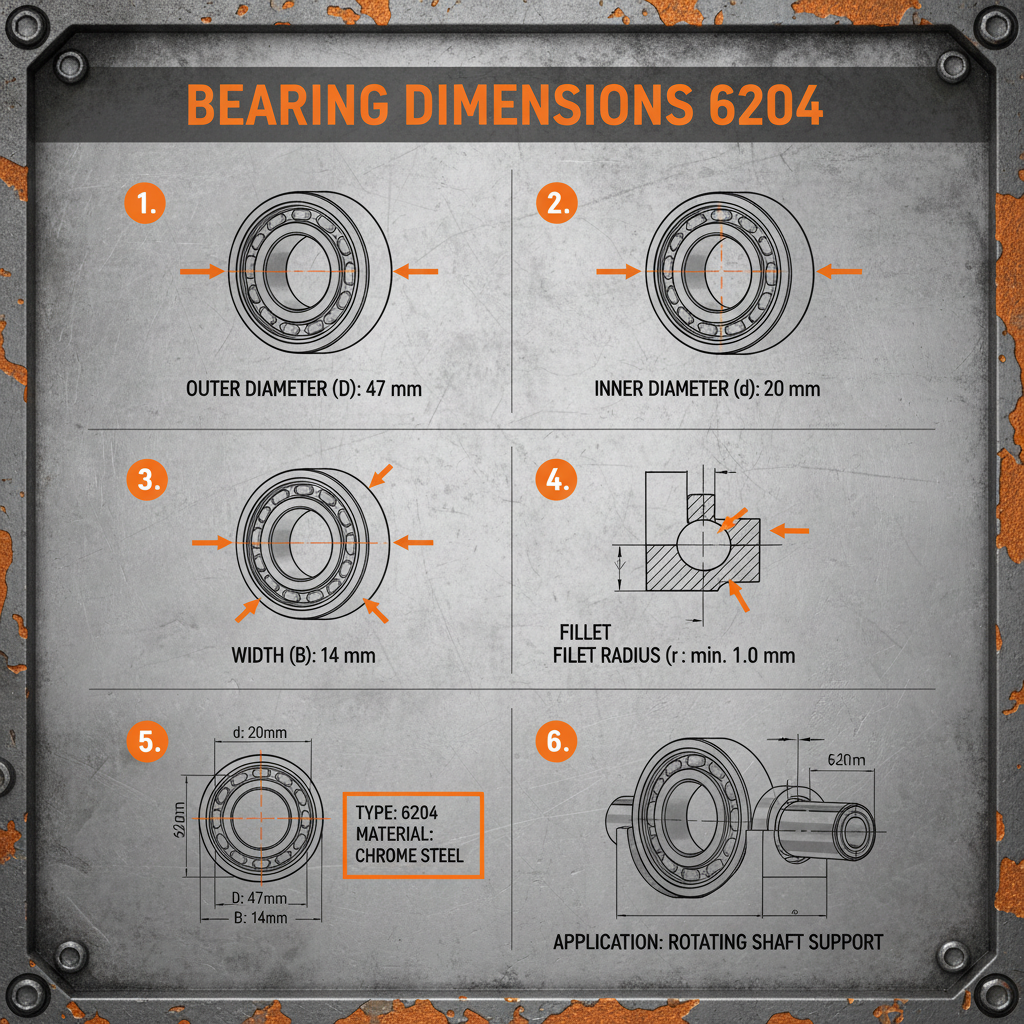
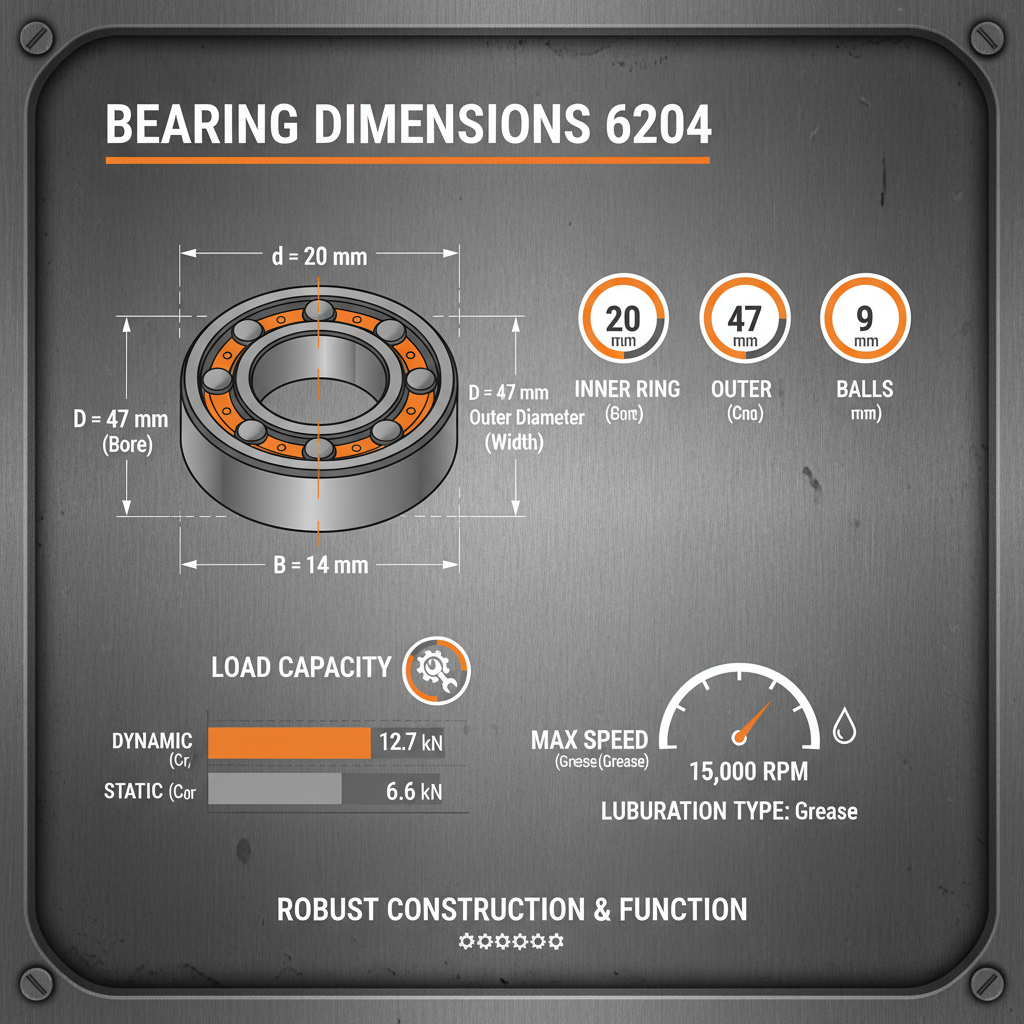
The 6204 bearing belongs to the 6000 series of ball bearings, which are known for their versatility and light load capacity. Its core dimensions define its suitability for specific applications. The most important dimensions include the bore diameter, outside diameter, and width. A precise understanding of these is critical for accurate selection and successful integration. The accuracy of these dimensions directly impacts the bearing's performance and longevity. Variations in these dimensions, even slight ones, can lead to increased friction, noise, and potential bearing failure.
Key Highlights: The 6204 bearing's dimensions are crucial for proper fit and function. Precise measurements ensure optimal performance and longevity in a wide range of applications.
Detailed 6204 Bearing Dimensions Specifications
Let's delve into the specific dimensions of the 6204 bearing. These values are generally standardized, but slight variations can occur based on manufacturing tolerances and the bearing’s precision class. Understanding these tolerances is essential for critical applications. These specifications are crucial when designing housings and shafts for optimal bearing performance.
6204 Bearing Dimensions Compared to Similar Sizes
Understanding how the 6204 bearing's dimensions relate to other commonly used bearings in the 6000 series can be helpful. For example, the 6205 bearing has a slightly larger bore diameter (25mm), while the 6203 has a smaller one (17mm). Considering these differences is essential when selecting the appropriate bearing for a specific application. Careful comparison can prevent misfits and ensure optimal performance. Ary Bearing provides a complete range of bearings for various applications.
Applications Utilizing the 6204 Bearing
The 6204 bearing’s compact size and robust construction make it ideal for a wide variety of applications, including electric motors, pumps, gearboxes, and household appliances. It is often found in skateboards, scooters, and other recreational equipment. Its versatility and relatively low cost contribute to its widespread use. Because of its dimensions, it’s a common choice when space is limited but reliable performance is still needed.
Factors Affecting Bearing Selection and Performance
Beyond the core dimensions, several other factors influence bearing selection and performance. These include the load capacity, speed requirements, operating temperature, and environmental conditions. Choosing the correct bearing material (steel, ceramic, or plastic) is also crucial for specific applications. Consideration of these factors ensures the selected bearing can withstand the demands of the intended application. Correct lubrication is also vital for prolonging bearing life and reducing friction.
Conclusion: Precision and Performance with 6204 Bearings
Understanding the 6204 bearing dimensions and related factors is essential for engineers, technicians, and anyone involved in mechanical systems. Precise dimensions guarantee proper fit, optimal performance, and a prolonged lifespan. Choosing the right bearing, considering the application's specific needs, ensures reliability and minimizes downtime.
Frequently Asked Questions (FAQs)
What is the typical tolerance for the bore diameter of a 6204 bearing?
The typical tolerance for the bore diameter of a 6204 bearing is generally within a range of +0.008mm to -0.005mm, depending on the precision class (P0, P6, P5, etc.). Higher precision classes will have tighter tolerances. These tolerances are critical for ensuring a proper interference fit with the shaft. It’s important to consult the bearing manufacturer's specifications for the exact tolerance values for the specific bearing being used. Ignoring these tolerances can lead to issues like excessive play or binding.
Can a 6204 bearing be used with a shaft that isn’t perfectly round?
While a slight deviation from perfect roundness might be acceptable in some low-precision applications, it is generally not recommended. A non-round shaft can cause uneven load distribution on the bearing, leading to premature wear and failure. The bearing will experience vibrations and increased noise. It’s crucial to ensure the shaft is within the specified roundness tolerance to guarantee optimal bearing performance and longevity. Proper shaft preparation, including grinding and polishing, is essential.
What materials are 6204 bearings typically made from?
6204 bearings are most commonly made from high-carbon chrome steel (AISI 52100). This material offers excellent hardness, wear resistance, and fatigue life. Stainless steel (AISI 440C) is also used for applications requiring corrosion resistance. In specialized applications, ceramic materials like silicon nitride are used for high-speed or high-temperature environments. The choice of material depends on the specific requirements of the application.
How does the precision class affect the dimensions of a 6204 bearing?
The precision class (e.g., P0, P6, P5, P4) dictates the allowable deviations in dimensions and running accuracy. Higher precision classes (P5, P4) have tighter tolerances, meaning the dimensions are closer to the nominal values and the bearing runs more smoothly with less vibration. Lower precision classes (P0, P6) have looser tolerances and are generally more cost-effective but may not be suitable for high-precision applications. Selecting the appropriate precision class is crucial for ensuring the bearing meets the performance requirements of the application.
Latest news
-
Professional Deep Groove Ball Bearing Supplier for Industrial Use
NewsApr.16,2026
-
Essential Guide to Deep Groove Ball Bearing Size Chart PDF
NewsApr.09,2026
-
Exploring the Deep Groove Ball Bearing Series for Optimal Performance
NewsApr.07,2026
-
Understanding Deep Groove Ball Bearing Imperial Sizes for Optimal Performance
NewsApr.04,2026
-
Comprehensive Deep Groove Ball Bearing Catalogue PDF Guide for Optimal Performance
NewsMar.31,2026
-
Deep Groove Ball Bearings Applications and Comprehensive Usage Guide
NewsMar.28,2026
 Afrikaans
 Albanian
 Amharic
 Arabic
 Armenian
 Azerbaijani
 Basque
 Belarusian
 Bengali
 Bosnian
 Bulgarian
 Catalan
 Cebuano
 Corsican
 Croatian
 Czech
Czech
 Danish
 Dutch
Dutch
 Esperanto
 Estonian
 Finnish
 French
 Frisian
 Galician
 Georgian
 German
 Greek
Greek
 Gujarati
 Haitian Creole
 Hausa
Hausa
 Hawaiian
 Hebrew
 Hindi
Hindi
 Miao
Miao
 Hungarian
 Icelandic
 Igbo
Igbo
 Indonesian
 Irish
Irish
 Italian
 Japanese
 Javanese
 Kannada
 Kazakh
 Khmer
Khmer
 Rwandese
 Korean
 Kurdish
 Kyrgyz
 Lao
Lao
 Latin
Latin
 Latvian
 Lithuanian
 Luxembourgish
 Macedonian
 Malgashi
 Malay
Malay
 Malayalam
 Maltese
 Maori
Maori
 Marathi
 Mongolian
 Myanmar
 Nepali
 Norwegian
 Norwegian
 Occitan
 Pashto
 Persian
 Polish
 Portuguese
 Punjabi
 Romanian
 Russian
 Samoan
 Scottish Gaelic
 Serbian
 Sesotho
 Shona
Shona
 Sindhi
 Sinhala
 Slovak
 Slovenian
 Somali
 Spanish
 Sundanese
 Swahili
 Swedish
 Tagalog
 Tajik
Tajik
 Tamil
Tamil
 Tatar
Tatar
 Telugu
 Thai
Thai
 Turkish
 Turkmen
 Ukrainian
 Urdu
Urdu
 Uighur
 Uzbek
Uzbek
 Vietnamese
 Welsh
Welsh
 Bantu
Bantu
 Yiddish
 Yoruba
 Zulu
Zulu
 English