
Apr . 16, 2026 02:05 Back to list
Professional Deep Groove Ball Bearing Supplier for Industrial Use
Finding the Right Deep Groove Ball Bearing Supplier for Your Business
In the world of industrial machinery and mechanical engineering, the reliability of a single component can determine the efficiency of an entire production line. Deep groove ball bearings are among the most widely used bearing types due to their versatility, low friction, and ability to handle both radial and axial loads. However, sourcing these components requires more than just a purchase; it requires a partnership with a professional deep groove ball bearing supplier who understands precision and durability. Whether you are in automotive manufacturing, home appliances, or heavy industrial equipment, selecting a supplier that prioritizes quality control and timely delivery is essential for minimizing downtime and maximizing equipment lifespan.
What to Look for in a Deep Groove Ball Bearing Supplier
Not all suppliers are created equal. When evaluating a deep groove ball bearing supplier, the first thing to examine is their material certification. High-quality bearings are typically made from GCr15 high-carbon chromium steel, which ensures hardness and wear resistance. Furthermore, a reputable supplier should provide clear data on tolerances and precision grades (such as P0, P6, or P5). The ability to offer customized solutions, such as specialized seals or lubrication options, also distinguishes a top-tier partner from a general wholesaler. A commitment to international standards like ISO ensures that the products integrate seamlessly into your existing machinery without requiring costly modifications.
Supplier Checklist: Look for ISO 9001 certification, comprehensive material test reports (MTR), a transparent lead-time policy, and a robust quality assurance system that includes noise and vibration testing.
Technical Specifications from a Leading Deep Groove Ball Bearing Supplier
Understanding the technical specifications is key to optimizing your machinery's performance. A professional deep groove ball bearing supplier provides detailed catalogs that allow engineers to match the bearing to the specific load and speed requirements of their application. Below is a standard specification table typically provided to ensure the correct selection of bearing series based on operational needs.
Comparing Suppliers: Premium Quality vs. Budget Options
In the procurement process, companies often face the dilemma of choosing between a premium deep groove ball bearing supplier and a low-cost alternative. While budget options may seem attractive for short-term cost reduction, they often lead to higher long-term expenses due to premature failure and increased maintenance. Premium bearings feature superior heat treatment and precision grinding, which reduces friction and noise. This leads to lower energy consumption and a significantly longer operational life, proving that the initial investment in quality pays off through operational stability.
Industry Applications for Deep Groove Ball Bearings
The versatility of these bearings allows them to be used across a spectrum of industries. In the automotive sector, they are critical for alternators and transmissions. In home appliances, they ensure the silent operation of washing machines and vacuum cleaners. Industrial fans, pumps, and conveyor systems also rely heavily on these components. Because of these diverse needs, partnering with an experienced deep groove ball bearing supplier ensures that you receive the correct seal type—whether it's an open bearing for lubricated environments or a sealed bearing (ZZ or 2RS) for dusty conditions.
Application Benefits:
• Low Friction: Maximizes energy efficiency in rotating machinery.
• High Versatility: Capable of handling combined loads.
• Easy Maintenance: Simple installation and replacement processes.
• Compact Design: Saves space within mechanical assemblies.
Optimizing Logistics with Your Bearing Partner
Beyond product quality, the logistical capability of your deep groove ball bearing supplier is a critical success factor. In a "Just-in-Time" (JIT) manufacturing environment, a delay of a few days in receiving bearings can halt an entire production line. Top suppliers implement advanced inventory management systems to ensure a steady supply of common sizes while offering rapid prototyping for custom orders. Reliable packaging is also vital; bearings are sensitive to corrosion and impact during transit, so vacuum sealing and reinforced boxing are standard requirements for international shipping to ensure the product arrives in pristine condition.
Conclusion: Securing Your Supply Chain with Ary Bearing
Choosing the right deep groove ball bearing supplier is an investment in the longevity and reliability of your equipment. By focusing on material quality, technical precision, and logistical efficiency, you can significantly reduce operational risks and improve productivity. Ary Bearing stands as a beacon of quality in the bearing industry, providing the professional support and high-performance components needed to keep your business moving forward. Don't leave your machinery to chance—partner with the experts.
Frequently Asked Questions (FAQs)
How do I choose the correct seal for my deep groove ball bearings?
The choice of seal depends entirely on your operating environment. Open bearings are best when the bearing is housed in an oil bath or when lubrication can be easily applied from the outside. Metal shields (ZZ) are ideal for protecting against larger dust particles and retaining grease in clean environments. Rubber seals (2RS) provide the best protection against moisture and fine dust, making them the preferred choice for outdoor or harsh industrial settings. Your deep groove ball bearing supplier can help you analyze your environment to select the optimal seal for maximum lifespan.
What causes premature failure in deep groove ball bearings?
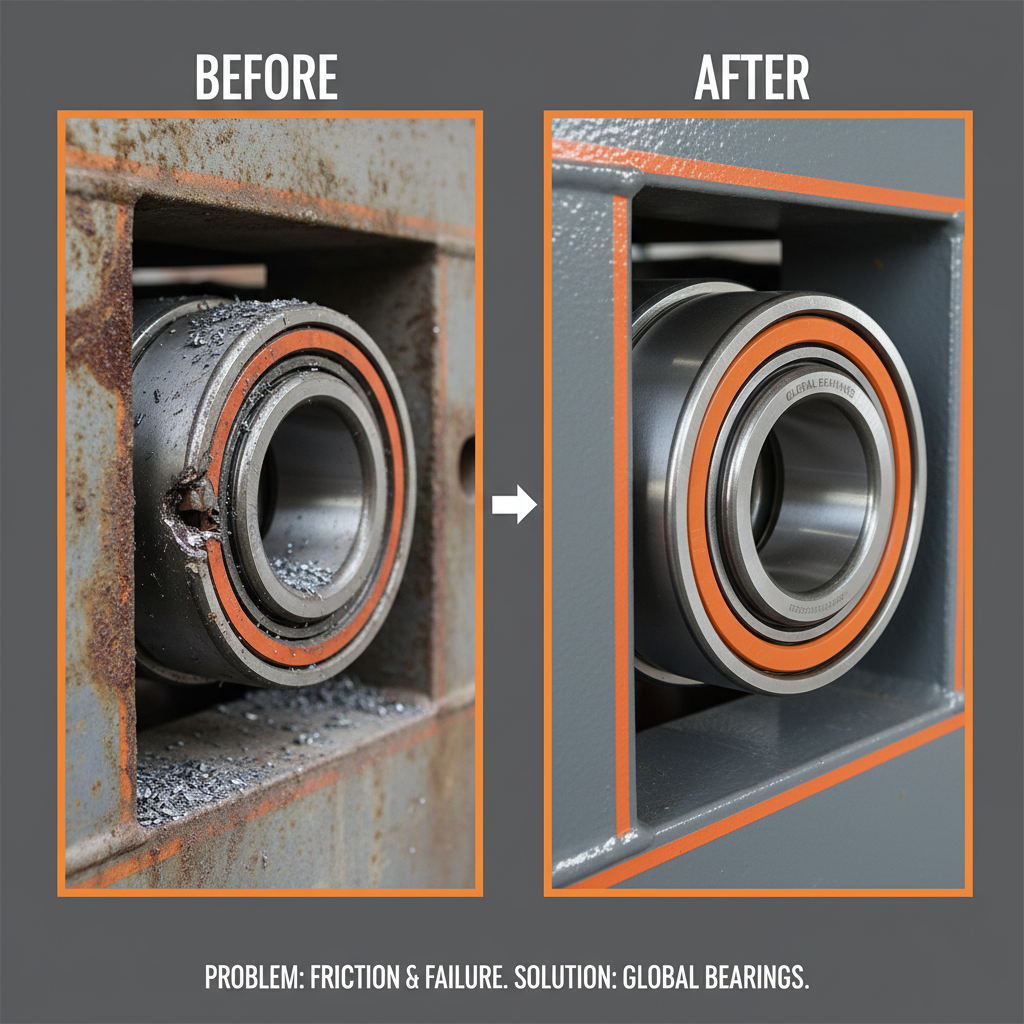
The most common causes of premature failure are improper lubrication, contamination, and misalignment. Over-lubricating can cause heat buildup, while under-lubricating leads to metal-on-metal friction. Contaminants like dust or water can enter the raceway if the wrong seal is chosen, causing pitting and wear. Misalignment puts uneven stress on the balls and races, leading to rapid degradation. By sourcing from a high-precision deep groove ball bearing supplier and following strict installation guidelines, you can avoid these common pitfalls.
Can deep groove ball bearings handle axial loads?
Yes, deep groove ball bearings are designed to handle primarily radial loads, but they can also support axial loads in both directions. However, their axial load capacity is significantly lower than their radial capacity. If your application requires very high axial thrust, a tapered roller bearing or a thrust ball bearing might be more appropriate. We recommend consulting with your deep groove ball bearing supplier to perform a load calculation to ensure the bearing is not overstressed, which would otherwise lead to early failure.
What is the difference between a standard and a high-precision bearing?
The difference lies in the dimensional tolerances and the surface finish of the raceways. High-precision bearings (like P6 or P5) have much tighter tolerances, meaning the deviation from the ideal size is minimal. This results in lower vibration, less noise, and the ability to operate at much higher rotational speeds. While standard bearings are sufficient for general machinery, high-precision options are essential for CNC machines, high-speed spindles, and aerospace components. A professional deep groove ball bearing supplier will provide the precision grade on the product certification.
Latest news
-
Professional Deep Groove Ball Bearing Supplier for Industrial Use
NewsApr.16,2026
-
Essential Guide to Deep Groove Ball Bearing Size Chart PDF
NewsApr.09,2026
-
Exploring the Deep Groove Ball Bearing Series for Optimal Performance
NewsApr.07,2026
-
Understanding Deep Groove Ball Bearing Imperial Sizes for Optimal Performance
NewsApr.04,2026
-
Comprehensive Deep Groove Ball Bearing Catalogue PDF Guide for Optimal Performance
NewsMar.31,2026
-
Deep Groove Ball Bearings Applications and Comprehensive Usage Guide
NewsMar.28,2026
 Afrikaans
 Albanian
 Amharic
 Arabic
 Armenian
 Azerbaijani
 Basque
 Belarusian
 Bengali
 Bosnian
 Bulgarian
 Catalan
 Cebuano
 Corsican
 Croatian
 Czech
Czech
 Danish
 Dutch
Dutch
 Esperanto
 Estonian
 Finnish
 French
 Frisian
 Galician
 Georgian
 German
 Greek
Greek
 Gujarati
 Haitian Creole
 Hausa
Hausa
 Hawaiian
 Hebrew
 Hindi
Hindi
 Miao
Miao
 Hungarian
 Icelandic
 Igbo
Igbo
 Indonesian
 Irish
Irish
 Italian
 Japanese
 Javanese
 Kannada
 Kazakh
 Khmer
Khmer
 Rwandese
 Korean
 Kurdish
 Kyrgyz
 Lao
Lao
 Latin
Latin
 Latvian
 Lithuanian
 Luxembourgish
 Macedonian
 Malgashi
 Malay
Malay
 Malayalam
 Maltese
 Maori
Maori
 Marathi
 Mongolian
 Myanmar
 Nepali
 Norwegian
 Norwegian
 Occitan
 Pashto
 Persian
 Polish
 Portuguese
 Punjabi
 Romanian
 Russian
 Samoan
 Scottish Gaelic
 Serbian
 Sesotho
 Shona
Shona
 Sindhi
 Sinhala
 Slovak
 Slovenian
 Somali
 Spanish
 Sundanese
 Swahili
 Swedish
 Tagalog
 Tajik
Tajik
 Tamil
Tamil
 Tatar
Tatar
 Telugu
 Thai
Thai
 Turkish
 Turkmen
 Ukrainian
 Urdu
Urdu
 Uighur
 Uzbek
Uzbek
 Vietnamese
 Welsh
Welsh
 Bantu
Bantu
 Yiddish
 Yoruba
 Zulu
Zulu
 English