
Mar . 19, 2026 02:05 Back to list
Understanding Deep Groove Ball Bearing 6203 Applications and Specifications
Understanding Deep Groove Ball Bearing 6203: A Comprehensive Guide
The deep groove ball bearing 6203 is a fundamental component in countless mechanical systems, prized for its versatility and reliability. This article provides an in-depth exploration of the 6203 bearing, covering its applications, key features, specifications, and benefits. We’ll delve into why this bearing is a preferred choice for engineers and professionals across diverse industries. Understanding the nuances of this bearing can contribute to better maintenance practices and optimized performance in your applications.
What is a Deep Groove Ball Bearing?
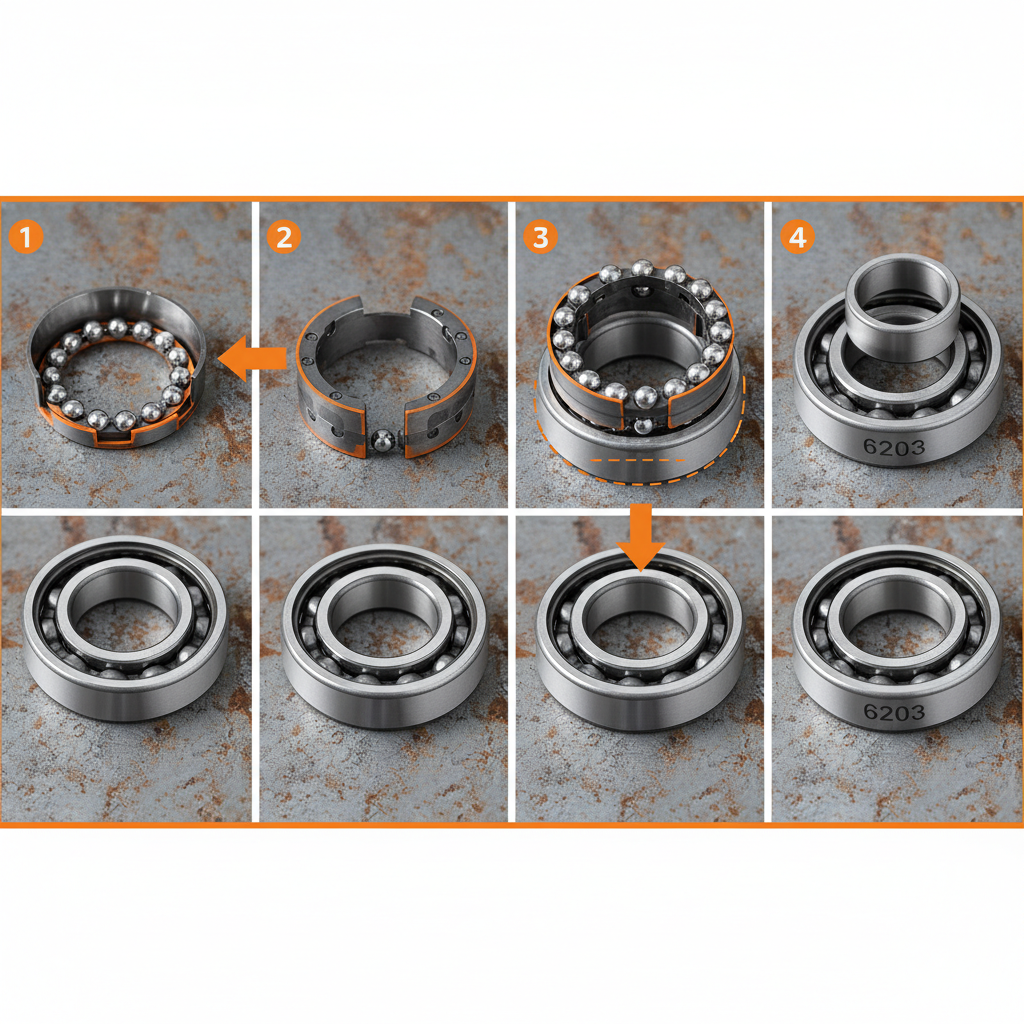
Deep groove ball bearings are the most widely used type of rolling-element bearing. Their design consists of inner and outer rings with raceways, and ball bearings that sit between them. The “deep groove” refers to the raceway geometry, which allows the bearing to support axial and radial loads. This simple yet effective design makes them incredibly versatile. ARY Bearing specializes in providing high-quality deep groove ball bearings, including the 6203 model.
Key Features: Supports both radial and axial loads, simple design, high-speed capability, available in various materials and configurations.
Deep Groove Ball Bearing 6203: Specifications and Dimensions
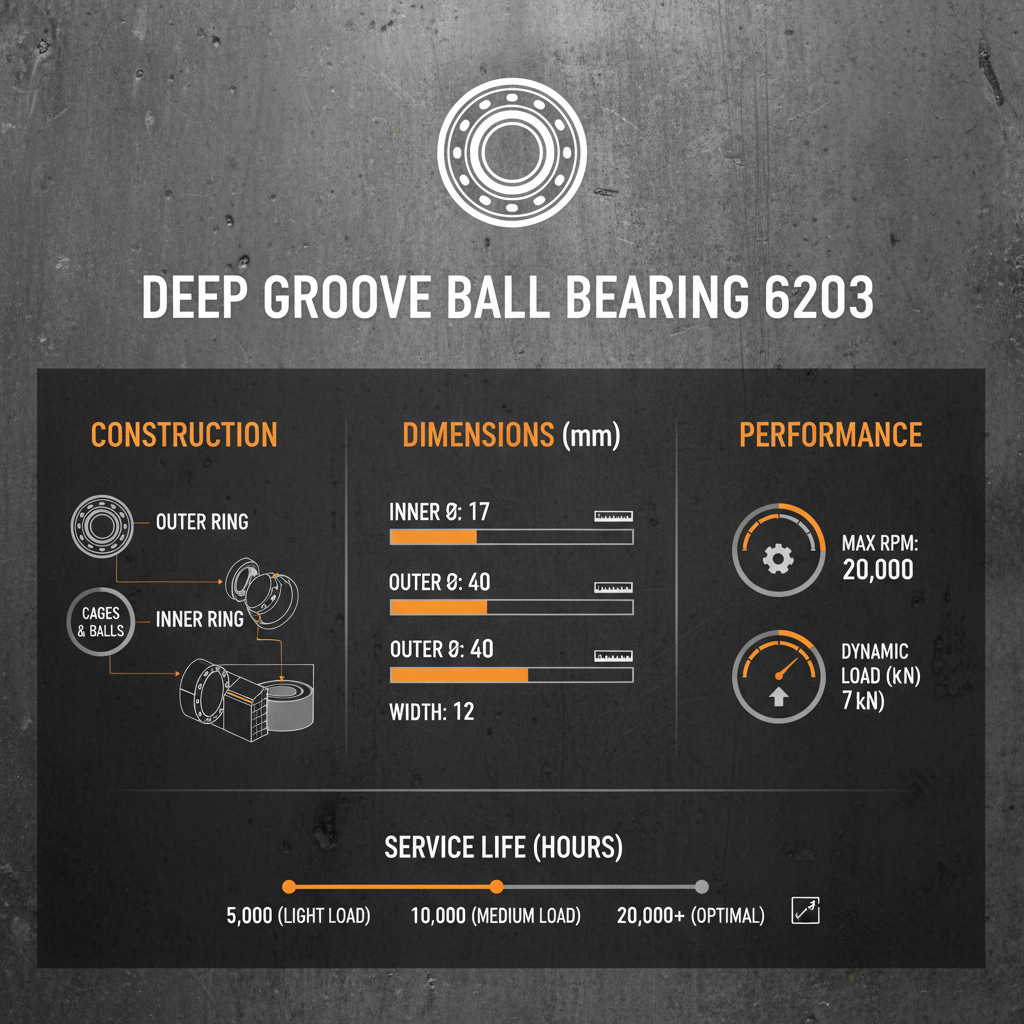
The 6203 designation indicates specific dimensional characteristics of the bearing. The first two digits (62) represent the bore diameter series, and the last two digits (03) represent the outer diameter and width. A 6203 bearing has a bore diameter of 17mm, an outer diameter of 40mm, and a width of 9mm. These precise dimensions are crucial for ensuring a proper fit within the designated housing and shaft. ARY Bearing maintains tight tolerances to guarantee consistent performance.
Applications of the 6203 Deep Groove Ball Bearing
The 6203 bearing finds applications in a vast array of machinery and equipment. Common uses include electric motors, pumps, gearboxes, conveyors, and household appliances. Its relatively small size and high performance make it ideal for applications where space is limited, but reliability is crucial. ARY Bearing offers the 6203 in various materials to suit specific environmental demands.
Materials and Lubrication for Deep Groove Ball Bearing 6203
Deep groove ball bearings like the 6203 are commonly manufactured from high-carbon chrome steel (AISI 52100), known for its hardness and wear resistance. However, other materials like stainless steel (for corrosion resistance) and ceramic (for high-speed, high-temperature applications) are also available. Proper lubrication is paramount to bearing life. Common lubricants include grease and oil, selected based on the operating speed, temperature, and load. ARY Bearing can advise on the optimal material and lubrication for your specific application.
Benefits of Choosing High-Quality 6203 Bearings
Investing in high-quality 6203 bearings, such as those offered by ARY Bearing, provides numerous benefits. These include reduced friction, increased efficiency, extended service life, and minimized downtime. Lower quality bearings can lead to premature failure, costly repairs, and production delays. Choosing a reputable supplier ensures you receive a product that meets stringent quality standards.
Conclusion: Optimizing Performance with the 6203 Bearing
The deep groove ball bearing 6203 is a cornerstone of modern machinery. Understanding its specifications, applications, and benefits is crucial for engineers and maintenance professionals. By selecting a reliable supplier like ARY Bearing, you can ensure optimal performance, longevity, and cost-effectiveness in your applications.
Frequently Asked Questions (FAQs)
What is the maximum speed rating for a 6203 bearing?
The maximum speed rating for a 6203 bearing depends on factors like lubrication, load, and operating temperature. Generally, a well-lubricated 6203 bearing can operate at speeds up to 10,000 RPM. However, exceeding this limit can lead to increased wear and premature failure. It’s important to consult the bearing manufacturer’s specifications and consider the specific application requirements to determine the appropriate speed limit. ARY Bearing provides detailed speed ratings and performance data for all our bearings.
How do I install a 6203 bearing correctly?
Proper installation is crucial for ensuring optimal bearing performance. First, ensure the housing and shaft are clean and free of debris. Use a suitable mounting tool to avoid damaging the bearing’s inner races. Apply a light coating of lubricant before installation. Avoid using excessive force during mounting. Misalignment can lead to premature failure. ARY Bearing offers technical support and installation guidelines.
What are common causes of 6203 bearing failure?
Common causes of 6203 bearing failure include improper lubrication, contamination, misalignment, excessive load, and fatigue. Regular inspection and maintenance can help prevent these issues. Look for signs of wear, corrosion, or damage. Address any problems promptly to avoid costly downtime. Using high-quality bearings from a reputable supplier like ARY Bearing can also significantly reduce the risk of failure.
Can a 6203 bearing handle axial loads?
While deep groove ball bearings are primarily designed for radial loads, they can also handle some axial loads. However, their axial load capacity is limited. For applications with significant axial loads, consider using a thrust ball bearing or a tapered roller bearing. The 6203 bearing's axial load capacity is typically around 50% of its dynamic radial load capacity. It is important to check the bearing specifications to ensure it can handle the expected axial load.
Latest news
-
Professional Deep Groove Ball Bearing Supplier for Industrial Use
NewsApr.16,2026
-
Essential Guide to Deep Groove Ball Bearing Size Chart PDF
NewsApr.09,2026
-
Exploring the Deep Groove Ball Bearing Series for Optimal Performance
NewsApr.07,2026
-
Understanding Deep Groove Ball Bearing Imperial Sizes for Optimal Performance
NewsApr.04,2026
-
Comprehensive Deep Groove Ball Bearing Catalogue PDF Guide for Optimal Performance
NewsMar.31,2026
-
Deep Groove Ball Bearings Applications and Comprehensive Usage Guide
NewsMar.28,2026
 Afrikaans
 Albanian
 Amharic
 Arabic
 Armenian
 Azerbaijani
 Basque
 Belarusian
 Bengali
 Bosnian
 Bulgarian
 Catalan
 Cebuano
 Corsican
 Croatian
 Czech
Czech
 Danish
 Dutch
Dutch
 Esperanto
 Estonian
 Finnish
 French
 Frisian
 Galician
 Georgian
 German
 Greek
Greek
 Gujarati
 Haitian Creole
 Hausa
Hausa
 Hawaiian
 Hebrew
 Hindi
Hindi
 Miao
Miao
 Hungarian
 Icelandic
 Igbo
Igbo
 Indonesian
 Irish
Irish
 Italian
 Japanese
 Javanese
 Kannada
 Kazakh
 Khmer
Khmer
 Rwandese
 Korean
 Kurdish
 Kyrgyz
 Lao
Lao
 Latin
Latin
 Latvian
 Lithuanian
 Luxembourgish
 Macedonian
 Malgashi
 Malay
Malay
 Malayalam
 Maltese
 Maori
Maori
 Marathi
 Mongolian
 Myanmar
 Nepali
 Norwegian
 Norwegian
 Occitan
 Pashto
 Persian
 Polish
 Portuguese
 Punjabi
 Romanian
 Russian
 Samoan
 Scottish Gaelic
 Serbian
 Sesotho
 Shona
Shona
 Sindhi
 Sinhala
 Slovak
 Slovenian
 Somali
 Spanish
 Sundanese
 Swahili
 Swedish
 Tagalog
 Tajik
Tajik
 Tamil
Tamil
 Tatar
Tatar
 Telugu
 Thai
Thai
 Turkish
 Turkmen
 Ukrainian
 Urdu
Urdu
 Uighur
 Uzbek
Uzbek
 Vietnamese
 Welsh
Welsh
 Bantu
Bantu
 Yiddish
 Yoruba
 Zulu
Zulu
 English